The Lean Person's Guide to Fatty Liver Disease
Think only overweight people get fatty liver? Think again. Your genetics play a huge role, especially a variant common in Latin American populations. Here’s what you need to know.
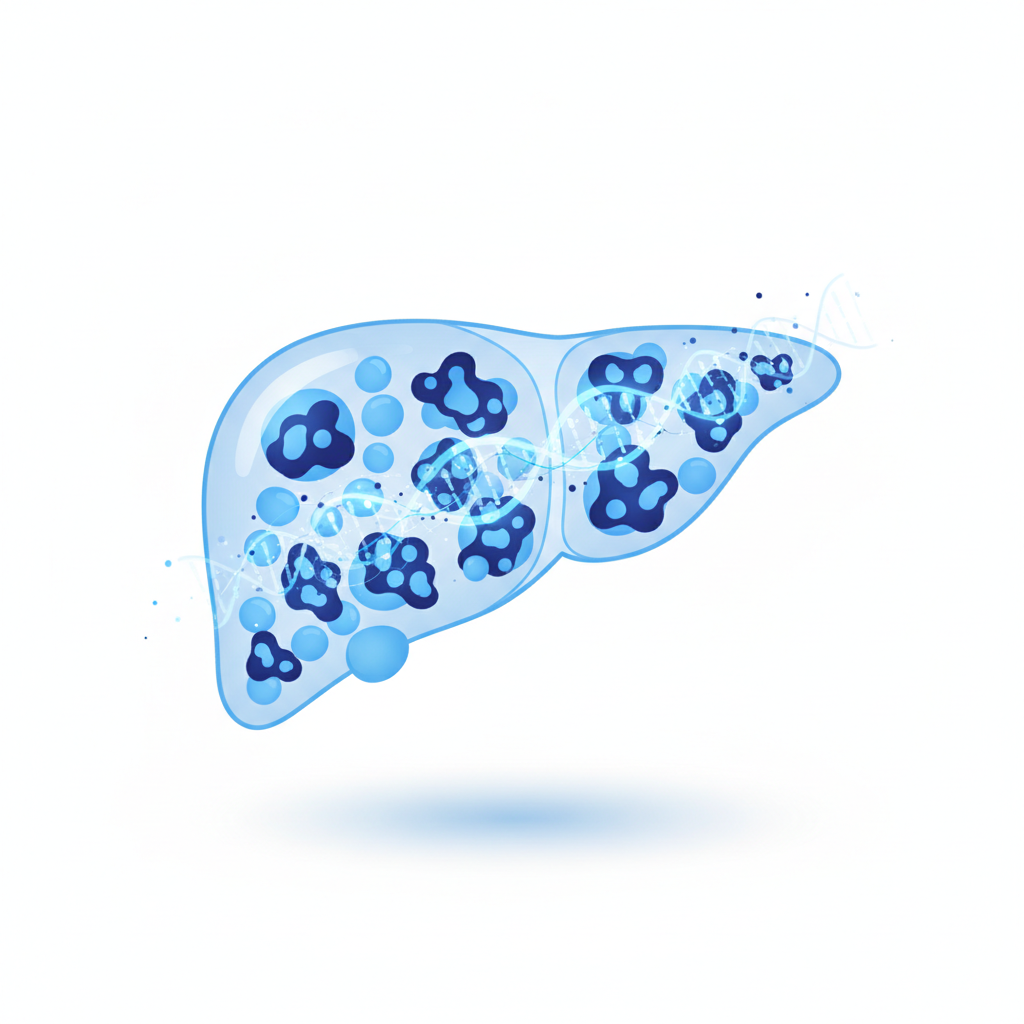
You follow a healthy lifestyle. You maintain a lean body weight. You barely drink alcohol. Yet, your doctor just mentioned two words that feel completely out of place: fatty liver. It’s a diagnosis that can be confusing and frustrating, sparking an immediate question many people ask online and in clinics: how is this possible?
The conventional wisdom links metabolic dysfunction-associated steatotic liver disease (MASLD)—the new medical term for non-alcoholic fatty liver disease (NAFLD)—directly to excess body weight. And while obesity is indeed the single biggest risk factor, the story is far more complex. A growing number of people with a “normal” body mass index (BMI) are being diagnosed, a condition known as lean MASLD. The culprit isn't always on the scale; often, it’s hidden in your DNA.
This condition arises from an accumulation of fat (steatosis) in liver cells. For some, it remains a relatively benign state. For others, it can progress to a more aggressive form called steatohepatitis (MASH), which involves inflammation and liver cell damage, potentially leading to fibrosis (scarring), cirrhosis, and even liver cancer. Understanding the interplay between your genes, your diet, and your metabolic health is the first step toward taking control and reversing the damage.
Fatty Liver Symptoms: The Silent Epidemic
One of the most challenging aspects of fatty liver disease is its stealthy nature. In its early stages, most people have no idea there’s a problem. There are typically no overt fatty liver symptoms, which is why it’s often discovered incidentally during routine blood work or an ultrasound for an unrelated issue.
When symptoms do appear, they are often vague and easily dismissed:
- Persistent fatigue: A profound sense of tiredness that isn't relieved by rest.
- Dull ache or discomfort: A feeling of fullness or a slight pain in the upper right side of your abdomen, where your liver is located.
- General malaise: A non-specific feeling of being unwell.
As the disease progresses and liver damage becomes more significant (progressing toward MASH or cirrhosis), the symptoms become much more severe and alarming. These can include yellowing of the skin and eyes (jaundice), swelling in the legs and abdomen (edema and ascites), easy bruising, and mental confusion. The goal is to identify and reverse the condition long before it reaches this advanced stage. The silence of early-stage MASLD is precisely why proactive screening and understanding your personal risk factors are so critical.
Beyond the Scale: The Genetics of a Fatty Liver
If weight isn't the whole story, what else is at play? The answer lies in your genetic blueprint. Several gene variants dramatically increase your susceptibility to accumulating fat in your liver, independent of your body weight. For individuals of Latin American descent, one variant is particularly important.
The most powerful genetic contributor to fatty liver is a variant in the PNPLA3 gene, known as I148M. Research shows this variant is remarkably common, present in approximately 49% of Hispanic individuals, compared to 23% in European Americans and 17% in African Americans (Wagenknecht et al., Hepatology, 2011). The PNPLA3 gene provides instructions for a protein that helps break down triglycerides (a type of fat) inside liver cells. The I148M variant impairs this process, causing fat droplets to build up and remain trapped in the liver.
Having one copy of this variant increases your risk. Having two copies—one from each parent—multiplies it significantly. It acts as a powerful accelerator, meaning that even with a modest caloric surplus or a diet high in certain carbohydrates, fat is more likely to be stored in your liver than in other tissues.
But PNPLA3 doesn't act alone. A polygenic risk score, which combines the effects of multiple genes, provides an even clearer picture. Other key players include:
- TM6SF2: This gene helps the liver export fat into the bloodstream in the form of VLDL particles. Certain variants impair this export function, essentially trapping fat inside the liver, much like a traffic jam on a highway out of the city.
- MBOAT7: Variants in this gene are associated with changes in the types of lipids within the liver, which can promote inflammation and the progression from simple steatosis to the more dangerous MASH.
- HSD17B13: Interestingly, some variants in this gene are protective. They appear to reduce the risk of inflammation and progression to cirrhosis, acting as a genetic brake on the disease process.
These genetic factors help explain why some lean individuals develop severe fatty liver disease while some obese individuals have relatively healthy livers (Eslam, M. et al., Journal of Hepatology, 2020). Your genes don't determine your fate, but they do set the stage. They lower the threshold for disease to develop, making lifestyle choices even more impactful.
How Is Fatty Liver Disease Diagnosed?
If you suspect you have fatty liver disease or have risk factors like a family history, type 2 diabetes, or high cholesterol, your doctor has several tools to investigate. The diagnostic process is typically a stepwise approach, starting with the least invasive methods.
-
Blood Tests: The first clue often comes from a standard liver function panel. Elevated levels of liver enzymes, particularly alanine aminotransferase (ALT) and aspartate aminotransferase (AST), suggest liver cells are stressed or damaged, causing them to leak these enzymes into the bloodstream. However, it's possible to have fatty liver with normal enzyme levels, especially in the early stages.
-
Non-Invasive Scoring Systems: To better assess risk without invasive procedures, clinicians often use scoring systems like the FIB-4 Index. This simple calculation uses your age, ALT level, AST level, and platelet count to estimate the likelihood of advanced fibrosis (liver scarring). A low FIB-4 score is reassuring, while a high score indicates the need for further evaluation.
-
Imaging: If blood tests are abnormal or suspicion is high, the next step is usually an abdominal ultrasound. This safe, painless imaging technique can visualize the liver and detect steatosis, which makes the liver appear brighter than normal (hyperechoic). The radiologist can often grade the fat accumulation as mild, moderate, or severe.
-
Advanced Testing: For a more precise quantification of fat and stiffness, your doctor might order a FibroScan (transient elastography). This specialized ultrasound-based device measures the velocity of a shear wave through the liver to estimate stiffness (a proxy for fibrosis) and uses a controlled attenuation parameter (CAP) to quantify the amount of fat. In some cases, an MRI with proton density fat fraction (MRI-PDFF) may be used for the most accurate measurement of liver fat.
How to Reverse Fatty Liver: It’s All About Lifestyle
Here is the good news: the liver has a remarkable capacity for regeneration. In most cases, simple fatty liver (steatosis) is completely reversible. Even early-stage fibrosis can be halted and sometimes improved. The key is consistent and targeted lifestyle modification. There are currently no FDA-approved medications for MASLD itself, making diet and exercise the frontline treatment.
The Fatty Liver Diet: What to Eat and What to Avoid
For a person at a healthy weight, the goal isn't necessarily weight loss but rather improving metabolic health and changing body composition. The focus is on what you eat, not just how much.
- Drastically Reduce Sugar and Refined Carbs: The liver is the primary site for metabolizing fructose, a component of table sugar and high-fructose corn syrup. Overloading the liver with fructose directly drives the creation of new fat (a process called de novo lipogenesis). This means eliminating sugary drinks, desserts, processed snacks, and white flour products (white bread, pasta).
- Embrace a Mediterranean-Style Diet: This eating pattern has been extensively studied and proven effective for reversing steatosis. It emphasizes whole foods: vegetables, legumes, fruits, whole grains, nuts, and seeds. Its primary fat source is monounsaturated fat from extra-virgin olive oil. It also includes fatty fish (like salmon and sardines) rich in omega-3 fatty acids, which have anti-inflammatory properties.
- Prioritize Protein and Fiber: Protein and fiber both promote satiety, helping you feel full and preventing overconsumption. They also help stabilize blood sugar and insulin levels, reducing the metabolic stress on your liver.
- Drink Coffee: This might be a surprise, but multiple studies show that regular consumption of black coffee (2-3 cups per day, without sugar or cream) is associated with a lower risk of liver fibrosis. The exact mechanisms are still being explored but are thought to involve antioxidant and anti-inflammatory compounds in coffee.
The Role of Exercise
Exercise is a powerful tool for reversing fatty liver, working independently of diet. It directly combats the root of the problem: insulin resistance. When you exercise, your muscles become more sensitive to insulin, pulling sugar from the blood for energy and reducing the burden on your liver.
Both aerobic exercise (brisk walking, running, cycling) and resistance training (lifting weights, bodyweight exercises) are effective. A combination is ideal. The American Association for the Study of Liver Diseases recommends 150-200 minutes of moderate-intensity aerobic activity per week, spread over at least three sessions (Chalasani et al., Hepatology, 2018). For lean individuals, building muscle through resistance training is particularly beneficial as muscle is a highly metabolically active tissue that helps manage blood sugar.
Ultimately, fatty liver disease, even in a lean person, is not a life sentence. It is a warning sign from your body—a message that your metabolic health is under strain. By understanding your genetic predispositions and adopting targeted, sustainable changes to your diet and physical activity, you can protect your liver and reverse the damage.
Knowing your genetic risk profile, especially for high-impact variants like PNPLA3 I148M, can be a powerful motivator. It provides a concrete reason to prioritize liver-healthy choices and transforms vague advice into a personalized action plan. To understand your unique genetic blueprint and how it influences your metabolic health, explore our advanced health panels.
Equipo BioGenetic
References
- Wagenknecht, L. E., et al. (2011). The I148M variant of the patatin-like phospholipase domain-containing 3 gene (PNPLA3) is associated with hepatic steatosis in a multiethnic-population-based sample. Hepatology, 53(5), 1695-1703. https://pubmed.ncbi.nlm.nih.gov/21384415/
- Eslam, M., Valenti, L., & George, J. (2020). PNPLA3: A journey from gene to disease. Journal of Hepatology, 72(5), 1034-1049. https://doi.org/10.1016/j.jhep.2020.03.017
- Ye, Q., Zou, B., Yeo, Y. H., et al. (2020). Global prevalence, incidence, and outcomes of non-obese or lean non-alcoholic fatty liver disease: a systematic review and meta-analysis. The Lancet Gastroenterology & Hepatology, 5(8), 739-752. https://doi.org/10.1016/S2468-1253(20)30077-7
- Chalasani, N., Younossi, Z., Lavine, J. E., et al. (2018). The diagnosis and management of nonalcoholic fatty liver disease: Practice guidance from the American Association for the Study of Liver Diseases. Hepatology, 67(1), 328-357. https://doi.org/10.1002/hep.29367
Want to learn more on this topic?
Access courses, downloadable guides, and workshops for healthcare professionals and curious patients.
Explore Academy →Get genetic science in your inbox
One email per month with articles on prevention, nutrigenomics, and science-backed clinical decisions.