Inherited Cardiovascular Risk: Beyond the Standard Lipid Panel
A routine cholesterol test misses critical genetic drivers of heart disease. Discover how Lp(a), monogenic FH mutations, and polygenic scores reshape lifetime risk and early prevention.
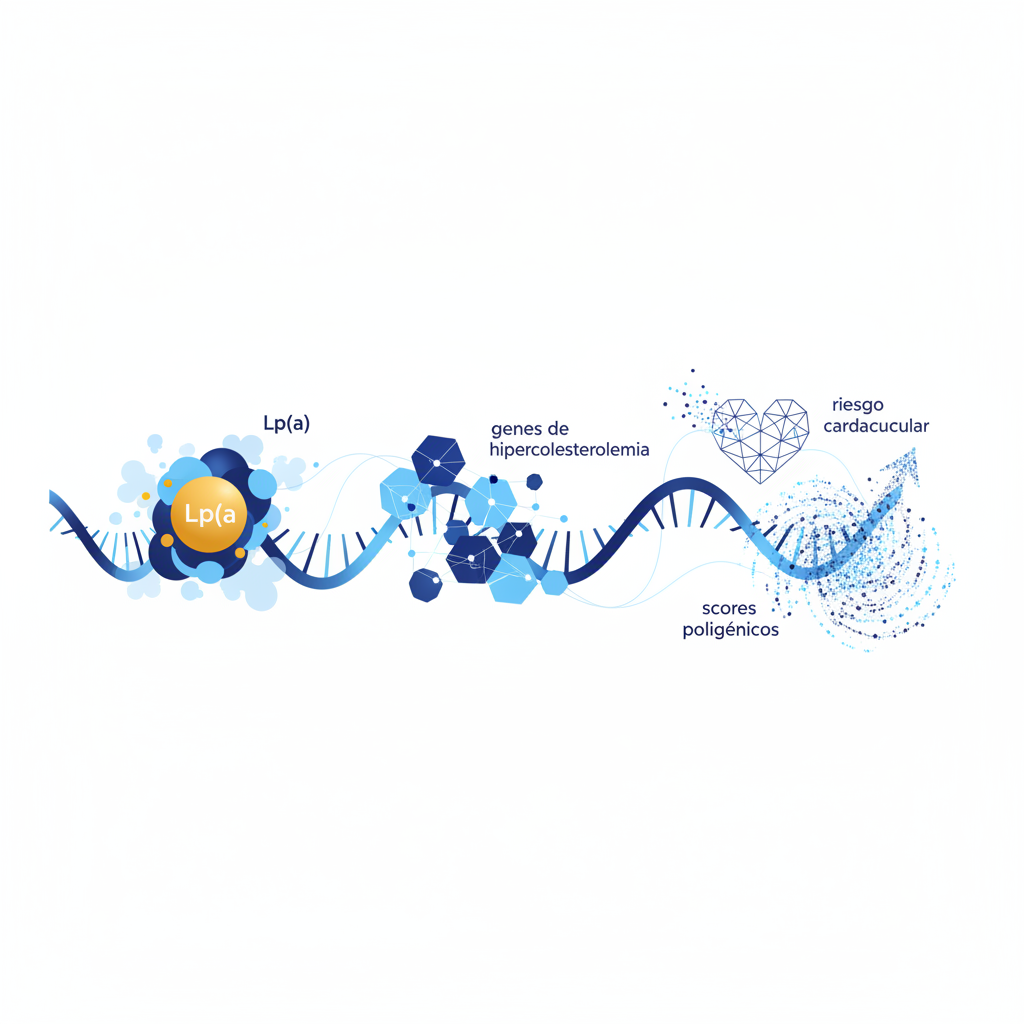
Roughly one in every 250 individuals carries a pathogenic variant causing familial hypercholesterolemia, yet more than 90% of them remain undiagnosed until an early myocardial infarction strikes. Even more pervasive is elevated lipoprotein(a), an independent, highly atherogenic variant of low-density lipoprotein carried by approximately one in five people worldwide. For these individuals, a routine annual lipid panel offers a fragile, often misleading sense of security.
A standard fasting lipid profile measures total cholesterol, high-density lipoprotein cholesterol (HDL-C), triglycerides, and calculated low-density lipoprotein cholesterol (LDL-C). While these numbers provide a baseline snapshot of circulating lipids, they fail to reveal the architecture of inherited risk. Two individuals can present with identical LDL-C levels of 130 mg/dL, yet their lifetime trajectory of vascular damage may diverge dramatically depending on whether that concentration is sustained by lifestyle factors or driven by genetically altered clearance kinetics since infancy. Understanding cardiovascular health requires looking beyond the basic panel into the monogenic drivers, structural lipoprotein variants, and polygenic burdens that govern true cardiovascular vulnerability.
The Blind Spot of Standard Lipid Testing
A persistent question surfaces among adults confronting an unexpected diagnosis of premature coronary disease: how can someone with unremarkable cholesterol suffer a sudden arterial occlusion in their thirties or forties? The answer frequently lies in circulating particles that standard laboratory panels simply do not measure.
Calculated LDL-C estimates the total cholesterol mass carried within LDL particles, typically utilizing the Friedewald equation or newer bivariate formulas. This calculation does not distinguish between standard LDL particles and more dangerous variants. Most critically, standard tests completely overlook lipoprotein(a), commonly written as Lp(a). When an individual presents with an LDL-C of 115 mg/dL, a significant fraction of that measured mass could actually be lipoprotein(a)-cholesterol, an entity with far higher atherogenic and thrombotic potential than standard LDL.
Conversely, when a 35-year-old displays an LDL-C level exceeding 200 mg/dL without overt symptoms, a frequent impulse is to attribute the spike to recent dietary habits, work stress, or minor metabolic fluctuations. Many individuals spend years attempting aggressive dietary interventions, hoping to normalize levels that biology has fundamentally hardwired. When circulating LDL-C crosses the classic threshold of 190 mg/dL, the probability of an underlying monogenic lipid disorder increases exponentially (Grundy et al., 2019). In this territory, lifestyle modification remains supportive, but it cannot repair absent or dysfunctional hepatic clearance mechanisms.
The Monogenic Triad: LDLR, APOB, and PCSK9
Familial hypercholesterolemia (FH) is the archetype of inherited cardiovascular disease. It is predominantly an autosomal dominant condition characterized by severely elevated LDL-C levels from birth and accelerated atherosclerotic cardiovascular disease (ASCVD). The biological mechanism centers on the clearance of circulating LDL particles by hepatocytes, governed by three primary genes.
The low-density lipoprotein receptor gene (LDLR) accounts for roughly 85% to 90% of identified monogenic FH cases (Nordestgaard et al., 2013). Thousands of distinct variants across LDLR disrupt normal physiology at various stages: preventing receptor synthesis in the endoplasmic reticulum, blocking transport to the cell surface, inhibiting binding to apolipoprotein B-100, or preventing the receptor-ligand complex from internalizing through clathrin-coated pits. In heterozygous FH, cells express roughly half the normal complement of functional receptors, leading to a doubling of circulating plasma LDL-C.
The second major gene is APOB, which encodes apolipoprotein B-100, the primary structural protein and ligand on the surface of LDL particles. Specific missense mutations in APOB (most classically p.Arg3527Gln) alter the conformation of the receptor-binding domain. The LDL receptor itself functions normally, but the circulating particle cannot efficiently anchor to it, prolonging the particle's half-life in the bloodstream.
The third player is PCSK9 (proprotein convertase subtilisin/kexin type 9). Under physiological conditions, PCSK9 binds to the LDL receptor on the cell surface. When the receptor internalizes its cargo, PCSK9 directs the receptor toward lysosomal degradation rather than recycling back to the plasma membrane. Gain-of-function variants in PCSK9 lead to excessive destruction of LDL receptors, dramatically reducing hepatic clearance capacity and mirroring the phenotype of an LDLR deletion.
The clinical significance of these mutations lies in lifetime cumulative exposure, often quantified as the "cholesterol-year score." Consider an individual who develops lifestyle-related hypercholesterolemia at age 45. Their vascular endothelium has experienced 45 years of normal physiologic lipid exposure before entering a period of elevated risk. In contrast, an individual with heterozygous FH caused by an LDLR mutation has harbored circulating LDL-C concentrations between 200 and 400 mg/dL since birth. By age 30, their cumulative vascular burden already matches that of a 60-year-old without the condition. Vascular walls do not experience cholesterol as a single laboratory reading in time; they reflect the continuous integration of lipid exposure over decades.
Lipoprotein(a): The Genetic Rogue Particle
Beyond the classical LDL pathway lies lipoprotein(a), an independent, highly heritable risk factor affecting roughly 20% of the global population. Lp(a) consists of an LDL-like core containing apolipoprotein B-100 covalently bound by a single disulfide bond to a unique glycoprotein: apolipoprotein(a), encoded by the LPA gene on chromosome 6q26-27 (Tsimikas, 2017).
Plasma concentrations of Lp(a) are 80% to 90% genetically determined, dictated largely by the size of the LPA gene itself. The gene features an unstable copy-number variation involving "kringle IV type 2" (KIV-2) repeats. Individuals with fewer KIV-2 repeats produce a smaller apo(a) isoform, which hepatocytes synthesize and secrete at significantly higher velocities, driving high circulating Lp(a) concentrations. Because diet, exercise, and metabolic state exert almost no influence on LPA transcription, an individual cannot lower their Lp(a) through nutritional changes or weight loss.
Lp(a) exerts a triple threat on the vasculature:
- Atherogenicity: Like standard LDL, Lp(a) crosses the endothelial barrier and becomes entrapped in the subendothelial space of coronary and carotid arteries, where its lipid payload undergoes oxidation, triggering foam cell formation.
- Thrombogenicity: Apolipoprotein(a) shares marked structural homology with plasminogen. It competes for fibrin-binding sites without possessing fibrinolytic enzymatic activity, directly inhibiting tissue plasminogen activator (tPA)-mediated fibrinolysis and promoting clot stability over ruptured plaques.
- Pro-inflammatory calcification: Lp(a) acts as the primary circulating carrier of oxidized phospholipids (OxPL) in human plasma. These oxidized lipids stimulate vascular cell adhesion molecules and osteogenic differentiation of valvular interstitial cells, accelerating not only coronary plaque formation but also calcific aortic valve stenosis (Kronenberg et al., 2022).
A critical paradox of modern lipidology is that standard HMG-CoA reductase inhibitors (statins) do not lower Lp(a). In fact, multiple trials demonstrate that statins can induce a modest 10% to 20% increase in circulating Lp(a) levels through transcriptional activation of the LPA promoter. When an asymptomatic patient with elevated Lp(a) is placed on a statin due to borderline LDL-C, their basic panel might show improvement while their overall atherogenic particle burden remains unmitigated. Recognizing elevated Lp(a) demands a shift in clinical strategy: aggressive reduction of all concurrent risk factors, lowering standard apoB-containing lipoproteins to ultra-low targets, and considering specialized therapies such as PCSK9 inhibitors or antisense oligonucleotides currently completing Phase III clinical trials.
Beyond Single Genes: The Landscape of Polygenic Risk
When a young adult presents with severe hypercholesterolemia or early coronary events, monogenic sequencing identifies a clear pathogenic variant in LDLR, APOB, or PCSK9 in roughly 20% to 40% of cases. The remaining majority of clinically suspected FH patients return a negative monogenic test result. This discrepancy does not imply that their cardiovascular risk is environmental or imagined. Instead, it frequently reflects the contribution of polygenic architecture.
Unlike monogenic disorders driven by a single high-impact mutation, polygenic hypercholesterolemia results from the cumulative inheritance of dozens or hundreds of common single-nucleotide polymorphisms (SNPs) across the genome. Each individual SNP confers a tiny effect, perhaps altering LDL receptor internalization velocity by 1% or slightly upregulating hepatic VLDL assembly. However, when an individual inherits a high dose of risk-increasing alleles across multiple loci—such as SORT1, APOE, ABCG5/G8, and CELSR2—the combined biological effect mirrors that of a monogenic LDLR mutation (Khera et al., 2018).
Polygenic Risk Scores (PRS) quantify this genome-wide distribution into an actionable percentile. A person situated in the top 5th percentile of cardiovascular PRS faces a lifetime risk of early myocardial infarction comparable to someone carrying a monogenic FH mutation. Furthermore, PRS provides critical prognostic context even in individuals carrying a monogenic mutation. A pathogenic LDLR mutation superimposed on an unfavorable polygenic background leads to severe, premature disease, whereas the same mutation paired with a low polygenic score can show reduced clinical penetrance.
By integrating monogenic testing, Lp(a) quantification, and polygenic scores, clinical genetics moves beyond simplistic binary classifications. We transition from asking whether a single gene is broken to evaluating the net genomic pressure pushing an individual toward vascular injury.
Clinical Actionability: Cascade Screening and Early Intervention
A common argument in clinical settings is that genetic testing for cardiovascular risk is redundant: if the treatment for high cholesterol is fundamentally a statin, why spend resources sequencing DNA? This perspective overlooks how genetic information directly alters the trajectory of care for patients and their families.
First, genetic confirmation transforms risk stratification and adherence. The 2018 AHA/ACC Cholesterol Guidelines and updated consensus statements recognize monogenic FH and elevated Lp(a) as independent risk-enhancing factors (Grundy et al., 2019). For an asymptomatic 32-year-old with an LDL-C of 195 mg/dL, standard 10-year risk calculators (such as the PCE or SCORE2) will paradoxically calculate a deceptively low 10-year risk, simply because age heavily weights these algorithms. Relying solely on short-term risk scores leads to deferred therapy. Genetic confirmation of an LDLR or PCSK9 variant demonstrates that this patient has already accumulated significant vascular exposure, justifying immediate initiation of high-intensity statin therapy, often combined with ezetimibe, regardless of calculated 10-year percentage outputs.
Second, definitive genetic findings unlock therapeutic access. In many healthcare systems, gaining insurance pre-authorization for advanced therapies—such as injectable PCSK9 monoclonal antibodies (evolocumab, alirocumab) or small interfering RNA (inclisiran)—requires formal documentation of familial hypercholesterolemia or elevated baseline cardiovascular risk that has failed to reach targets on maximally tolerated oral therapy. A molecular genetic report provides objective, permanent evidence supporting these interventions.
Third, and most powerful, is the mechanism of cascade screening. Autosomal dominant traits carry a 50% probability of transmission to first-degree relatives. When an index case (proband) is identified through comprehensive genetic testing, a systematic process of testing siblings, parents, and children can begin. Cascade screening is recognized internationally as one of the most cost-effective genomic interventions in public health. Rather than waiting for a sibling to suffer an acute coronary syndrome at age 42, genetic cascade testing identifies the alteration in their twenties or teens, enabling preventive therapy before subclinical plaque can form in the coronary tree.
Clinical cardiovascular medicine is moving decisively toward precision prevention. The traditional model of reacting to mid-life vascular crises after decades of silent damage is giving way to early, proactive intervention based on genomic realities. Moving beyond the routine lipid panel is no longer a theoretical exercise; it is the cornerstone of modern cardiovascular protection.
Uncovering your genetic cardiovascular architecture provides actionable clarity that routine laboratory panels cannot deliver. Whether you are investigating an unexplained family history of heart disease, managing stubborn lipid numbers, or seeking a comprehensive view of your lifetime vascular risk, specialized genetic analysis clarifies your path forward. Explore our clinical cardiovascular testing options to take control of your long-term health.
Equipo BioGenetic
Explore our Clinical Health & Genetic Panels
References
- Grundy SM, Stone NJ, Bailey AL, et al. 2018 AHA/ACC/AACVPR/AAPA/ABC/ACPM/ADA/AGS/APhA/ASPC/NLA/PCNA Guideline on the Management of Blood Cholesterol: A Report of the American College of Cardiology/American Heart Association Task Force on Clinical Practice Guidelines. Circulation. 2019;139(25):e1082-e1143. PubMed
- Nordestgaard BG, Chapman MJ, Humphries SE, et al. Familial hypercholesterolaemia is underdiagnosed and undertreated in the general population: guidance for clinicians to prevent coronary heart disease: consensus statement of the European Atherosclerosis Society. Eur Heart J. 2013;34(45):3478-3490. PubMed
- Tsimikas S. A Test in Context: Lipoprotein(a): Diagnosis, Prognosis, Controversies, and Emerging Therapies. J Am Coll Cardiol. 2017;69(6):692-711. PubMed
- Kronenberg F, Mora S, Stroes ESG, et al. Lipoprotein(a) in atherosclerotic cardiovascular disease and aortic stenosis: a European Atherosclerosis Society consensus statement. Eur Heart J. 2022;43(39):3925-3946. PubMed
- Khera AV, Chaffin M, Aragam KG, et al. Genome-wide polygenic scores for common diseases identify individuals with risk equivalent to monogenic mutations. Nat Genet. 2018;50(9):1219-1224. PubMed
Want to learn more on this topic?
Access courses, downloadable guides, and workshops for healthcare professionals and curious patients.
Explore Academy →Get genetic science in your inbox
One email per month with articles on prevention, nutrigenomics, and science-backed clinical decisions.