Genetic Chronotype: How PER3, CLOCK, and BMAL1 Shape Your Days
Discover how variants in PER3, CLOCK, and BMAL1 govern your sleep architecture, metabolic rate, and optimal daily schedule beyond willpower.
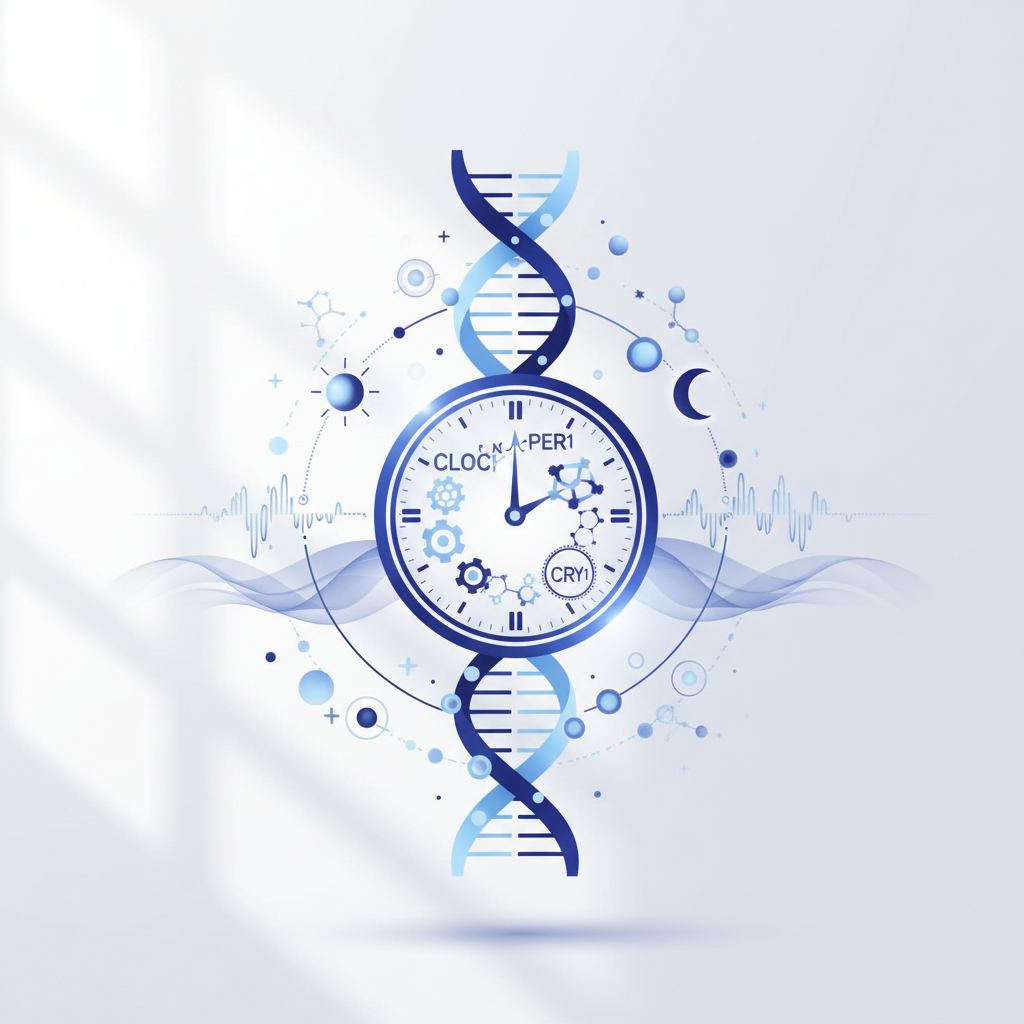
In a landmark genome-wide association study analyzing 697,828 individuals from the UK Biobank and 23andMe cohorts, researchers identified 351 distinct genetic loci that directly shape whether a person naturally wakes at sunrise or operates at their peak late at night (Jones et al., 2019). Morning or evening preference is not a consequence of discipline or bad habits. It is a measurable physiological phenotype driven by molecular feedback loops running in virtually every cell of your body.
Society tends to praise early risers, assuming that an alarm set for 5:00 AM reflects moral virtue and high productivity. For decades, popular culture has insisted that anyone can condition themselves into a morning person with sufficient determination. Molecular genetics tells an entirely different story. Circadian biology is deeply hardwired, driven by an autonomous transcriptional network that oscillates over an approximately 24-hour cycle. When your daily routine directly contradicts this internal molecular clock, the mismatch generates real physiological debt, altering your endocrine signaling, cognitive longevity, and cardiometabolic health.
Understanding the specific genetic variants that dictate your chronotype allows you to move away from rigid, generalized lifestyle advice and build an evidence-based daily framework aligned with your unique biology.
The Core Molecular Loop: How CLOCK, BMAL1, and PER3 Govern Your Tissues
At the center of circadian rhythm generation lies the transcription-translation feedback loop (TTFL). In mammals, this cellular mechanism depends on two primary transcription factors: CLOCK (Circadian Locomotor Output Cycles Kaput) and BMAL1, which is encoded by the ARNTL gene (Aryl Hydrocarbon Receptor Nuclear Translocator-Like).
During the early hours of your biological day, CLOCK and BMAL1 bind together in the cell nucleus to form a functional heterodimer. This protein complex attaches to specific regulatory DNA sequences known as E-box elements within the promoter regions of target genes. Among these targets are the Period genes (PER1, PER2, PER3) and Cryptochrome genes (CRY1, CRY2). As the transcription of PER and CRY accelerates, their resulting protein products accumulate in the cytoplasm, gradually forming multi-protein complexes. Later in the biological cycle, these complexes translocate back into the nucleus, where they directly bind to the CLOCK:BMAL1 complex and shut down their own transcription. Eventually, the PER and CRY proteins undergo degradation through ubiquitin-proteasome pathways, freeing CLOCK and BMAL1 to restart the cycle anew.
While PER1 and PER2 are essential for the primary pacing of this feedback loop, PER3 operates as a critical modifier of sleep homeostasis and diurnal preference. A well-characterized structural variant in PER3 involves a variable number tandem repeat (VNTR) of a 54-base-pair sequence in exon 18, producing either a 4-repeat (short, PER3 4/4) or a 5-repeat (long, PER3 5/5) allele (Archer et al., 2003).
Individuals who inherit the long PER3 5/5 genotype display a pronounced morning preference, accompanied by a faster buildup of homeostatic sleep pressure during wakefulness. When deprived of sleep, these individuals show marked cognitive decline in executive tasks and substantial disruptions in non-rapid eye movement (NREM) slow-wave activity (Viola et al., 2007). In contrast, carriers of the shorter PER3 4/4 variant tend toward an evening chronotype. They accumulate sleep pressure more slowly, showing greater neurobehavioral resilience during extended periods of wakefulness, yet they struggle substantially when forced into early conventional work hours.
Single-nucleotide polymorphisms (SNPs) within ARNTL (such as rs11024103 and rs3789327) modify the stability and expression of BMAL1, influencing not only sleep duration but also fundamental metabolic parameters like blood pressure regulation and glucose homeostasis (Woon et al., 2007). Simultaneously, variants in CLOCK, such as the well-studied 3111T/C polymorphism (rs1801260), delay the phase of the circadian cycle. Carriers of the C allele exhibit reduced morning alertness, later sleep onset times, and higher susceptibility to daytime sleepiness.
Morningness, Eveningness, and the MEQ Score
In clinical research and sleep medicine, chronotype is routinely quantified using the Morningness-Eveningness Questionnaire (MEQ), developed by Horne and Östberg. The assessment categorizes people across a spectrum ranging from definite morning types (scores 70 to 86) to definite evening types (scores 16 to 41).
For a long time, questionnaires like the MEQ were regarded solely as subjective behavioral assessments. However, modern genetic data reveals a striking correlation between an individual's MEQ score and their underlying circadian genotype. When large populations complete the MEQ alongside genetic profiling, individuals with the CLOCK 3111C allele and PER3 4/4 variants consistently cluster into the lower score tiers, defining them as evening chronotypes or night owls. Those homozygous for PER3 5/5 disproportionately score in the highest tiers, reflecting true morning preference.
Understanding your chronotype along this biological continuum explains why social jetlag occurs. Social jetlag describes the chronic temporal discrepancy between an individual's endogenous biological clock and their social, academic, or professional commitments. An evening chronotype forced to wake up at 6:30 AM every weekday lives in a constant state of circadian desynchrony, equivalent to traveling across two to three time zones every Monday morning and flying back on Friday evening.
This continuous phase misalignment elevates baseline cortisol, shifts the nocturnal peak of melatonin secretion, and leads to persistent sleep debt. You cannot simply willpower your way out of a physiological phase delay. When your lifestyle requires you to rise before your core body temperature minimum has occurred, your central nervous system remains in a biological night state, impairing your working memory, reaction times, and mood regulation.
Metabolic Consequences: Peripheral Clocks and Insulin Sensitivity
The central master clock, situated in the suprachiasmatic nucleus (SCN) of the hypothalamus, synchronizes to light via intrinsically photosensitive retinal ganglion cells. However, molecular clocks also function autonomously in peripheral tissues, including the liver, skeletal muscle, pancreas, and adipose tissue. These peripheral clocks rely on the exact same CLOCK, BMAL1, and PER genetic machinery to anticipate nutrient intake and coordinate metabolic fluxes.
When central circadian signals fall out of sync with peripheral tissue rhythms, metabolic flexibility suffers. A prime example is pancreatic beta-cell function. The transcription of genes involved in insulin secretion is under direct circadian control via BMAL1 and CLOCK. In healthy human physiology, insulin sensitivity peaks during the biological morning and declines steadily toward the biological evening.
When evening chronotypes—particularly those carrying the CLOCK 3111C variant—consume large caloric meals late into the night, their peripheral organs are ill-prepared to manage the nutrient load. Research demonstrates that carriers of the CLOCK 3111C allele lose significantly less weight during standard dietary interventions when consuming their main meals late in the day compared to early eaters with the same genotype (Garaulet et al., 2010). This resistance stems from altered ghrelin and leptin dynamics, blunted nocturnal insulin sensitivity, and attenuated energy expenditure.
Moreover, genetic variations in ARNTL directly disrupt lipid oxidation pathways. Disrupted BMAL1 expression impairs the regular cyclical release of free fatty acids from adipose depots, causing ectopic fat accumulation in hepatocytes and skeletal myocytes. This cellular disruption explains why chronic night-shift workers and individuals with unmanaged evening chronotypes face statistically elevated risks of developing metabolic syndrome, non-alcoholic fatty liver disease, and type 2 diabetes.
Tactical Circadian Optimization: Training, Meals, and Shift Work
Armed with personal genetic data, you can design a strategic daily framework that works alongside your circadian biology rather than fighting against it. Strategic timing adjustments across nutrition, exercise, and light exposure yield profound physiological dividends.
1. Meal Timing and Metabolic Windows
Regardless of your chronotype, the biological evening is universally poor for processing carbohydrate-heavy meals. For evening types (PER3 4/4 or CLOCK 3111C carriers), the natural temptation is to push breakfast to late morning and consume the vast majority of calories between 8:00 PM and 11:00 PM. This habit drives persistent hyperinsulinemia and impairs deep sleep architecture.
To correct this without forcing unmanageable early-morning meals:
- Establish a time-restricted eating window that ends at least three hours before your biological bedtime.
- Shift your primary carbohydrate intake to the middle of your active day, when peripheral insulin sensitivity is highest.
- If you wake up without an appetite, focus on hydration and protein intake first, delaying heavy complex carbohydrates until midday.
2. Resistance and Aerobic Training
Muscular strength, anaerobic power, and joint flexibility track closely with the diurnal core body temperature curve. Core body temperature reaches its lowest point roughly two hours before your habitual wake time and peaks in the late afternoon to early evening.
- Morning types (PER3 5/5): Your neuromuscular efficiency and core body temperature peak earlier in the day, typically between 10:00 AM and 2:00 PM. You can tolerate heavy resistance training or high-intensity interval sessions in the morning without excessive central nervous system fatigue.
- Evening types (PER3 4/4): Attempting maximal strength training at 6:00 AM often leads to sub-optimal motor unit recruitment and higher perceived exertion. Your physical performance peaks between 4:00 PM and 8:00 PM. Schedule challenging workouts during this afternoon window to capitalize on elevated core temperature, peak lung function, and optimal protein synthesis signaling.
3. Navigating Shift Work and Jet Lag
Shift work poses an aggressive circadian challenge, but genetic predisposition heavily influences individual tolerance. Individuals homozygous for the long PER3 5/5 allele struggle severely with rotating or nocturnal shifts due to their high homeostatic sleep pressure and accelerated cognitive decline under sleep restriction. If you carry this genotype, permanent day shifts or non-rotating schedules protect your neurological health far better than rotating rotas.
For evening types who naturally tolerate night shifts more effectively, managing light exposure remains critical:
- Photobiological signaling: Use high-intensity blue-enriched light (460 to 480 nm) during the first half of your shift to suppress melatonin and anchor alertness.
- Shift termination: Wear blue-blocking glasses during your commute home in the morning daylight to prevent light from resetting your central clock into an active daytime state.
- Jet lag mitigation: When traveling eastward across time zones, morning types adjust more rapidly than evening types because advancing the circadian phase (waking up earlier) is naturally easier for them. Evening types adapt faster to westward travel, which requires delaying the circadian phase. To accelerate phase advances when traveling east, seek bright outdoor sunlight immediately upon waking at your destination and avoid bright light exposure in the late evening.
Translating Genotype into Daily Practice
Circadian health is not a contest of discipline. The human genome evolved with natural variation in chronotypes, likely as an adaptive evolutionary mechanism that ensured tribal groups always had alert individuals guarding the perimeter across different hours of the night.
Modern society often overlooks this evolutionary wisdom, imposing rigid schedules that run counter to millions of years of genetic programming. When you identify whether your cells run on a PER3 5/5 fast-accumulating cycle, a delayed CLOCK 3111C phase, or specific ARNTL variants, you gain actionable physiological clarity. You stop judging your productivity through the lens of generic morning routines and begin scheduling your intellectual deep work, workouts, meals, and recovery periods around your innate biological architecture.
Optimizing your daily performance starts with looking at your unique genetic blueprint. Explore our comprehensive nutritional and metabolic genetic profiling at BioGenetic Nutrición to discover how your DNA shapes your internal clock, metabolism, and daily nutritional requirements.
Equipo BioGenetic
References
- Jones SE, Lane JM, Wood AR, et al. Genome-wide association analyses of chronotype in 697,828 individuals provides insights into circadian rhythms. Nat Commun. 2019;10(1):343. PubMed
- Viola AU, Archer SN, James LM, et al. PER3 polymorphism predicts sleep structure and cognitive performance. Curr Biol. 2007;17(7):613-618. PubMed
- Archer SN, Robilliard DL, Skene DJ, et al. A length polymorphism in the circadian clock gene Per3 is linked to delayed sleep phase syndrome and extreme diurnal preference. Sleep. 2003;26(4):413-415. PubMed
- Garaulet M, Lee YC, Shen J, et al. CLOCK gene is implicated in weight loss in obese patients. Am J Clin Nutr. 2010;92(6):1468-1478. PubMed
- Woon PY, Kaisaki PJ, Bragança J, et al. Aryl hydrocarbon receptor nuclear translocator-like (BMAL1) is associated with susceptibility to hypertension and type 2 diabetes. Am J Hum Genet. 2007;81(4):780-791. PubMed
Want to learn more on this topic?
Access courses, downloadable guides, and workshops for healthcare professionals and curious patients.
Explore Academy →Get genetic science in your inbox
One email per month with articles on prevention, nutrigenomics, and science-backed clinical decisions.