Beyond Diet: The Genetic Reasons for High Uric Acid
Struggling with high uric acid despite a clean diet? The reason is likely in your DNA. Discover how key genes, not just purines, control your uric acid levels.
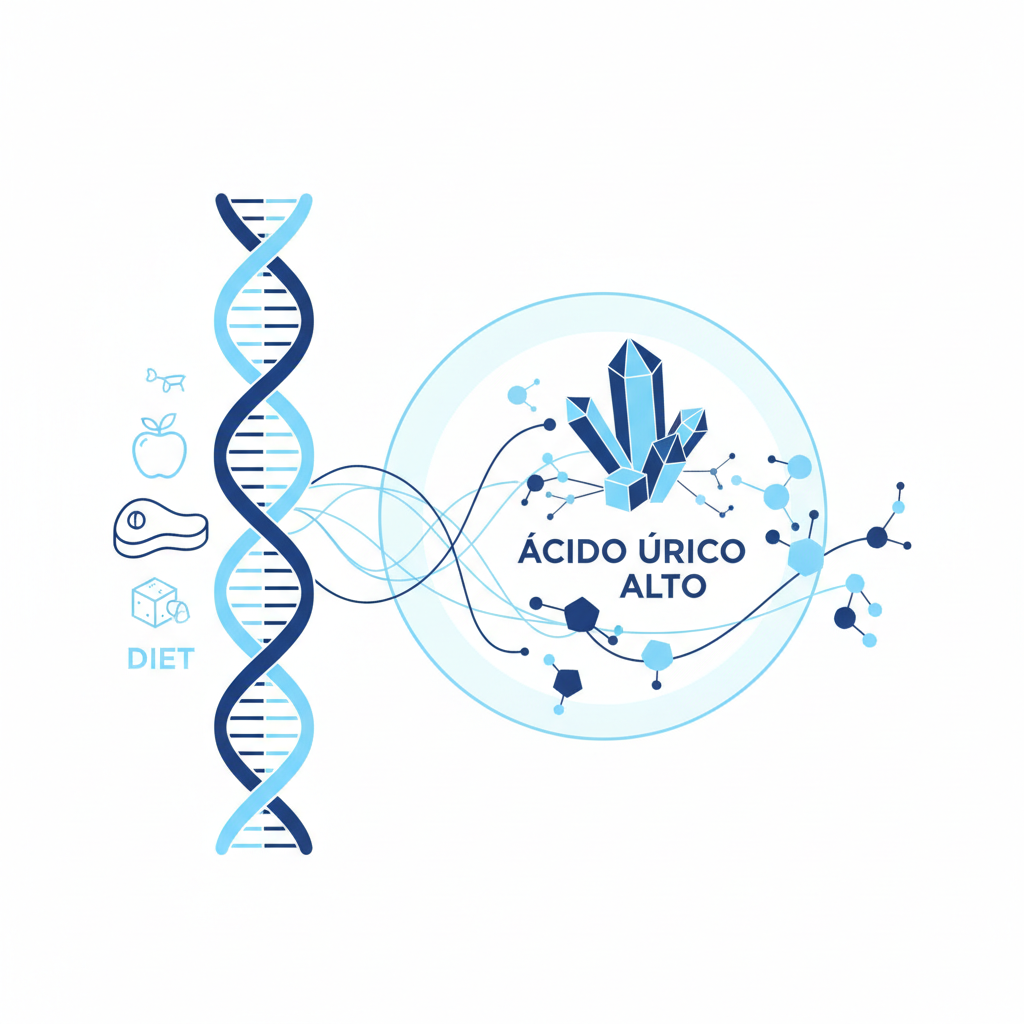
Picture this: You and a friend share the same meal—a steak, maybe some seafood, and a beer. A few days later, a routine blood test shows you have high uric acid, while your friend’s level is perfectly normal. How is this possible?
You've followed all the conventional advice. You’ve cut back on red meat and are wary of shellfish. Yet the number on your lab report remains stubbornly high. This frustrating scenario is incredibly common, and it highlights a fundamental misunderstanding about what drives hyperuricemia, the medical term for high uric acid. While food choices matter, they are only one piece of a much larger puzzle. For most people, the real driver is genetics.
Your body’s ability to process and excrete uric acid is largely programmed by your DNA. Understanding this genetic component is the key to moving beyond dietary frustration and developing an effective, personalized strategy for managing your health.
What Are Normal Uric Acid Levels, and What Are High Uric Acid Symptoms?
Before diving into the causes, it’s important to define the terms. Uric acid is a natural waste product created when the body breaks down purines—chemical compounds found in your cells and in many foods.
Your kidneys are responsible for filtering most of this uric acid out of your blood and excreting it in your urine. When this system is out of balance—either because your body is producing too much or, more commonly, your kidneys aren't clearing enough—levels in the blood rise.
So, what are normal uric acid levels? While lab ranges can vary slightly, most clinical guidelines define hyperuricemia as a uric acid level above:
- 7.0 mg/dL (416 µmol/L) for men
- 6.0 mg/dL (357 µmol/L) for women
One of the most challenging aspects of high uric acid is that it often has no symptoms. It can be elevated for years without you knowing it, a silent risk factor accumulating in the background. When symptoms do appear, it’s because the excess uric acid has started to crystallize. These sharp, needle-like urate crystals can deposit in different parts of the body, causing significant health problems.
The most well-known of these is gout. But the risks don't stop there. Chronically high levels are also linked to kidney stones and a growing list of cardiovascular and metabolic conditions, including hypertension, chronic kidney disease, and metabolic syndrome (Johnson et al., 2013). The connection is so significant that some researchers now consider uric acid an independent risk factor for high blood pressure.
The Purine Puzzle: Diet's Role is Smaller Than You Think
If you've ever searched for information on this topic, you’ve been inundated with lists of purine-rich foods to avoid: organ meats, bacon, certain fish like sardines and anchovies, and beer. This advice isn't wrong, but it’s incomplete and often over-emphasized.
Dietary purines only account for about 30% of the uric acid in your body. The other 70% is endogenous, meaning it comes from the natural turnover of your own cells. This explains why even people on strict low-purine or vegetarian diets can still have high uric acid. Your body is simply producing a significant amount on its own, regardless of what you eat.
Furthermore, not all purines are created equal. Studies have shown that purines from plant sources, such as those in oats, beans, and lentils, do not carry the same risk of raising uric acid or triggering gout as purines from animal sources (Zgaga et al., 2012).
A more significant dietary culprit is often fructose, particularly in the form of high-fructose corn syrup found in sodas and processed foods. Fructose is metabolized in a unique way that rapidly consumes ATP (the cell's energy molecule), a process that triggers a surge in uric acid production. This is a separate pathway from purine breakdown, which explains why a sugary drink can raise your uric acid just as much, or even more, than a high-purine meal.
So, while moderating your intake of beer, red meat, and sugary beverages is a sensible part of any health strategy, it's rarely the complete solution. For the majority of people with hyperuricemia, the primary issue lies not with what they're putting in, but with what their body is failing to take out.
The Real Driver: How Your Genes Control High Uric Acid
The most common cause of high uric acid isn't overproduction; it's under-excretion. Over 90% of cases of persistent hyperuricemia are due to the kidneys not filtering out uric acid efficiently. And this efficiency is determined, in large part, by your genes.
Think of your kidneys as a sophisticated filtration plant. Tiny tubes called nephrons filter your blood. As the filtered fluid moves through these tubes, specialized protein transporters decide what gets reabsorbed back into the blood and what gets sent out in the urine. Several key genes code for these transporters, acting as the system's gatekeepers.
Common variations in these genes can dramatically tip the balance toward reabsorbing too much uric acid. Here are three of the most influential players:
-
SLC2A9 (GLUT9): This is the powerhouse of uric acid regulation. The GLUT9 protein it codes for is responsible for the majority of urate reabsorption from the kidneys back into the bloodstream. Common genetic variants in SLC2A9 can make this transporter over-efficient, pulling too much uric acid out of the urine and keeping blood levels high. Variations in this single gene can account for a significant portion of the variability in uric acid levels between individuals.
-
ABCG2: If SLC2A9 is an importer, ABCG2 is a crucial exporter. This protein actively pumps uric acid out of cells into the urine and the gut for elimination. Certain common variants in the ABCG2 gene create a dysfunctional, or "loss-of-function," protein. This genetic handicap significantly reduces your body's ability to dispose of uric acid, causing it to build up in the blood. These variants are one of the strongest genetic risk factors for developing gout (Major et al., 2018).
-
SLC22A12 (URAT1): Like GLUT9, the URAT1 protein also reabsorbs uric acid in the kidneys. It's another key part of the system that prevents you from losing too much urate. It's so important that it's the target of certain gout medications (uricosurics like probenecid), which work by blocking URAT1 to force more uric acid into the urine.
Your final uric acid level is a negotiation—a balance between your body's production and how efficiently your kidneys, guided by genes like SLC2A9 and ABCG2, can clear it. For many, a genetic predisposition means their kidneys' default setting is to hold onto uric acid too tightly.
How to Lower Uric Acid: An Evidence-Based Guide
Once you understand the genetic and metabolic drivers, you can adopt a more nuanced and effective management plan. The goal is to lower your uric acid level enough to prevent crystal formation, generally below 6.0 mg/dL, according to the American College of Rheumatology (FitzGerald et al., 2020).
1. Strategic Dietary Changes: Instead of broad restrictions, focus on high-impact changes.
- Limit Fructose and Alcohol: The strongest evidence points to sugar-sweetened beverages and alcohol (especially beer) as major drivers. Cutting these is often more effective than eliminating all purine-rich foods.
- Moderate High-Purine Animal Foods: You don't necessarily need to become a vegetarian. Simply moderate your intake of red meat, organ meats, and certain types of seafood.
- Stay Hydrated: Drinking plenty of water is crucial. It helps dilute uric acid in your blood and urine, reducing the risk of both gout flares and kidney stones.
- Consider Dairy and Coffee: Some studies suggest that low-fat dairy products and coffee consumption are associated with lower uric acid levels.
2. Lifestyle and Weight Management: Excess body fat contributes to both increased uric acid production and decreased kidney excretion. Gradual weight loss through a balanced diet and regular exercise can be one of the most effective non-medical interventions for lowering uric acid. Avoid crash dieting or prolonged fasting, as this can temporarily spike levels due to rapid cell turnover.
3. Medical Treatment: For many people with a strong genetic predisposition, diet and lifestyle changes alone will not be enough to reach the target level of <6.0 mg/dL. This is not a personal failure; it's a matter of physiology. When lifestyle changes are insufficient, medication is a safe and highly effective option.
- Xanthine Oxidase Inhibitors (e.g., Allopurinol, Febuxostat): These drugs work by reducing the body's production of uric acid.
- Uricosurics (e.g., Probenecid): These drugs work by blocking reabsorption in the kidneys (acting on transporters like URAT1), forcing more uric acid to be excreted.
What Are the Main Causes of Gout?
Gout is a painful form of inflammatory arthritis caused by the crystallization of uric acid in the joints. The sharp, needle-like crystals trigger an intense inflammatory response, leading to the classic symptoms of redness, swelling, and severe pain—often in the big toe.
The underlying cause of gout is chronically high uric acid (hyperuricemia). While a specific trigger, like a large meal with beer or dehydration, can precipitate an acute attack, it can only do so in someone whose system is already overloaded. The root cause is the persistent high level of uric acid in the blood, which, as we've seen, is primarily driven by inefficient kidney excretion due to genetic factors.
Understanding your genetic risk for under-excretion can reframe your approach to management—from simply avoiding triggers to actively managing the underlying systemic issue with your doctor.
Ultimately, managing high uric acid is a lesson in personalized medicine. It requires moving past the one-size-fits-all advice and understanding the unique interplay between your diet, your metabolism, and your DNA. Recognizing that your genetic makeup plays the lead role can be empowering, helping you and your healthcare provider make informed decisions that go beyond the dinner plate.
At BioGenetic, we believe knowledge is power. Our advanced health panels analyze key genes like SLC2A9 and ABCG2, providing deep insights into your body's innate ability to manage uric acid. This information can be a valuable tool for you and your healthcare provider to create a management strategy that is tailored directly to your biology.
Discover how your genetics influence your health.
Equipo BioGenetic
References
- Johnson, R. J., et al. Hypertension. 2013. https://pubmed.ncbi.nlm.nih.gov/24043813/
- Zgaga, L., et al. PLoS One. 2012. https://pubmed.ncbi.nlm.nih.gov/22745749/
- Major, T. J., et al. Nucleic Acids Research. 2018. https://pubmed.ncbi.nlm.nih.gov/29771373/
- FitzGerald, J. D., et al. Arthritis & Rheumatology. 2020. https://doi.org/10.1002/art.41246
- Tin, A., et al. Nature Genetics. 2019. https://pubmed.ncbi.nlm.nih.gov/31636496/
Want to learn more on this topic?
Access courses, downloadable guides, and workshops for healthcare professionals and curious patients.
Explore Academy →Get genetic science in your inbox
One email per month with articles on prevention, nutrigenomics, and science-backed clinical decisions.