The Genetics of Menopause: Beyond Your Mother's Timeline
It's a common question: will your menopause mirror your mother's? While family history is a powerful clue, your DNA tells a much more specific story.
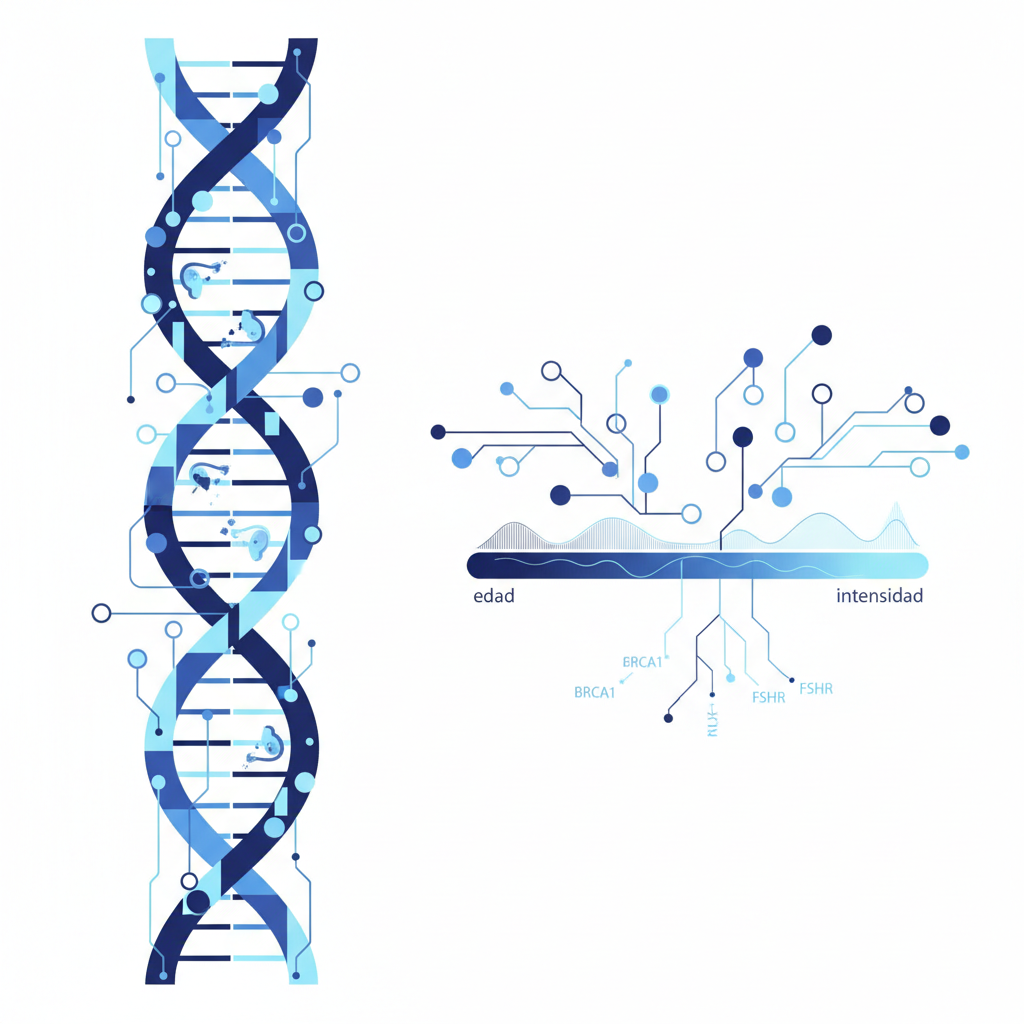
It's one of the most common questions we hear: “My mom went through menopause at 56. Does that mean I will too?” The short answer is that your mother’s experience is a very strong indicator. The timing of menopause is, to a large degree, written in your DNA. But genetics is rarely that simple. It’s less like a single instruction inherited from one person and more like a complex chorus of genetic variants inherited from both parents, interacting with your unique life and environment.
Menopause, officially defined as the 12-month mark after your final menstrual period, marks a profound biological shift. But the journey there, known as perimenopause, can begin years earlier. This transition is driven by the gradual depletion of ovarian follicles, the tiny sacs that hold your eggs. As this reserve dwindles, estrogen production becomes erratic and eventually declines, triggering a cascade of changes throughout the body. Understanding the genetic factors that orchestrate this timeline doesn't just satisfy curiosity; it provides a powerful tool for proactive health management during a critical life stage.
Decoding the Clock: What Determines the Age of Menopause?
The average age of natural menopause is around 51, but the range is wide, from the early 40s to the late 50s. Studies on twins and families show that genetics account for 50% to as much as 85% of this variation. So while the rule of thumb about your mother’s age holds some truth, your personal genetic blueprint provides a much higher-resolution picture.
Large-scale genetic studies, known as genome-wide association studies (GWAS), have revolutionized our understanding of this process. By analyzing the DNA of hundreds of thousands of women, scientists have identified hundreds of specific genetic loci that influence ovarian aging. A landmark study published in Nature identified 290 distinct genetic signals linked to the age of natural menopause (Ruth et al., 2021).
Many of these genes are involved in a surprising biological process: DNA damage repair. Genes like MCM8, BRSK1, and CHEK2 are crucial for maintaining the integrity of the DNA within developing eggs. Oocytes (immature eggs) are arrested in development for decades, making them vulnerable to accumulated DNA damage. A highly efficient DNA repair system is essential to preserve the ovarian reserve. Genetic variants that make this repair system slightly less effective can accelerate the rate of oocyte depletion, leading to an earlier menopause. For example, certain variants in CHEK2, a well-known tumor suppressor gene, are associated with a reproductive lifespan that is shorter by about 3.5 years.
Of course, genetics isn't the whole story. Lifestyle factors also play a significant role. Smoking, for instance, is consistently linked to an earlier onset of menopause, often by one to two years. Body mass index (BMI) and long-term nutritional patterns can also subtly shift the timeline. However, the genetic foundation sets the primary window during which these environmental factors operate.
Why Do Menopause Symptoms Vary So Much?
For some, menopause brings on relentless hot flashes and night sweats. For others, these hallmark symptoms are mild or entirely absent. This dramatic difference in experience is also, in part, genetic. Vasomotor symptoms (VMS) arise from the brain's hypothalamus—the body's thermostat—becoming more sensitive due to fluctuating estrogen levels. This can cause it to misinterpret a normal body temperature as being too hot, triggering a sudden, intense heat release and sweating.
Genetics can influence both the body's handling of estrogen and the brain's sensitivity to its decline. For example, variants in genes responsible for estrogen metabolism, such as CYP1B1, can affect how quickly estrogen is broken down and cleared from the body. This can influence the levels of estrogen metabolites, which themselves have biological activity and can impact symptom severity.
Furthermore, the genes that code for estrogen receptors (ESR1 and ESR2), the cellular docks where estrogen exerts its effects, also show significant variation across the population. Some variants may alter the sensitivity of tissues—including the brain's thermoregulatory center—to falling estrogen levels, making some individuals more prone to intense symptoms (Crandall et al., 2017). This explains why two people with similar estrogen levels can have vastly different experiences. It's not just about how much estrogen you have, but how your body is genetically programmed to respond to it.
The Post-Menopause Shift: Bone, Heart, and Metabolism
The loss of estrogen's protective effects after menopause initiates fundamental changes in long-term health risks. Your underlying genetic predispositions, which may have been masked for decades by hormones, can suddenly become much more relevant.
Bone Density: Estrogen is a critical regulator of bone remodeling, the lifelong process of breaking down old bone and building new bone. It acts as a brake on osteoclasts, the cells that dissolve bone. When estrogen levels plummet, this brake is released, and bone loss accelerates dramatically. Women can lose up to 20% of their bone density in the five to seven years following menopause. This is why osteoporosis risk skyrockets. Your genetic baseline for peak bone mass, along with variants in genes related to Vitamin D metabolism (like VDR) and collagen formation, interacts with this hormonal shift to determine your ultimate fracture risk.
Cardiovascular Risk: Before menopause, women generally have a lower risk of cardiovascular disease than men. This advantage diminishes rapidly after menopause. Estrogen helps maintain blood vessel elasticity, promotes healthy cholesterol profiles (raising HDL, lowering LDL), and has anti-inflammatory effects. Its decline leads to stiffer arteries, a shift towards a more atherogenic lipid profile, and increased inflammation—all key drivers of heart disease (El Khoudary et al., 2020). Recent research even suggests that menopause can alter gene expression within the heart muscle itself, changing how the heart adapts to stress. Your inherited risks for high cholesterol, hypertension, or clotting disorders become much more critical to manage during this time.
Metabolism and Body Composition: Many people notice a change in body shape after menopause, with a tendency to accumulate fat around the abdomen (visceral fat) rather than on the hips and thighs. This isn't just a cosmetic concern; visceral fat is metabolically active and a major contributor to insulin resistance, raising the risk for type 2 diabetes. Estrogen loss directly impacts how your body partitions fat and how sensitive your cells are to insulin. Again, your genetic predisposition to insulin resistance or metabolic syndrome sets the stage for how significantly this hormonal shift will impact your metabolic health.
Personalizing Your Strategy with a Genetic Roadmap
Knowing your genetic predispositions isn't about predicting an unchangeable fate. It's about creating a personalized health strategy to navigate the menopause transition and beyond. Your DNA provides the 'why' behind your risks, allowing you and your healthcare provider to focus on the most effective 'how' for prevention.
Hormone Therapy (HT): For many, replacing estrogen is the most effective way to manage moderate to severe vasomotor symptoms and prevent bone loss. However, the decision is highly personal. A comprehensive genetic profile can help clarify the risk-benefit equation by assessing your baseline genetic risk for conditions like venous thromboembolism (blood clots) or certain hormone-sensitive cancers. This information adds a crucial layer of data to the shared decision-making process with your doctor.
Targeted Exercise: While all exercise is beneficial, knowing your risks allows for targeted interventions. If your genetic profile indicates a high risk for osteoporosis, prioritizing resistance training becomes non-negotiable. Mechanical loading from weight-bearing exercise is a powerful signal that stimulates bone-building cells. Meta-analyses consistently show that resistance training programs significantly improve bone mineral density in postmenopausal women, directly counteracting the effects of estrogen loss (Zhao et al., 2021). It also builds muscle, which boosts metabolism and improves insulin sensitivity.
Precision Nutrition: Post-menopause, a one-size-fits-all diet is less effective. Understanding your genetic profile can help tailor nutritional advice. Do you have variants that make you more sensitive to the LDL-raising effects of saturated fats? Does your body have a harder time converting sunlight into active Vitamin D, increasing your need for supplementation to protect your bones? Genetic insights can guide you toward a diet that optimally manages your specific cardiovascular and metabolic risks.
Menopause is not an illness, but a natural and significant transition. It’s a point at which your genetic susceptibilities and your lifestyle choices converge with profound consequences for your long-term health. By understanding the information coded in your DNA, you can move from a reactive to a proactive stance, empowering yourself to navigate this chapter with strength, knowledge, and personalized care.
If you want to understand your unique genetic blueprint to better prepare for or navigate the changes of menopause, a comprehensive health analysis can provide an invaluable roadmap. Understanding your predispositions for bone health, cardiovascular risk, and metabolic changes allows you to create a truly personalized strategy for the years to come.
Equipo BioGenetic
References
- Ruth KS, Day FR, Hussain J, et al. Genetic insights into the biological mechanisms of reproductive ageing. Nature. 2021. https://doi.org/10.1038/s41586-021-03779-7
- Crandall CJ, Mehta PK, Bairey Merz CN. The role of genetics in the pathogenesis of vasomotor symptoms. Menopause. 2017. https://doi.org/10.1097/GME.0000000000000795
- El Khoudary SR, Aggarwal B, Beckie TM, et al. Menopause transition and cardiovascular disease risk: implications for timing of early prevention: a scientific statement from the American Heart Association. Circulation. 2020. https://doi.org/10.1161/CIR.0000000000000912
- Zhao R, Zhao M, Xu Z. The effects of resistance training on bone mineral density in older adults: a systematic review and meta-analysis. Sports Medicine. 2021. https://doi.org/10.1007/s40279-021-01602-5
Want to learn more on this topic?
Access courses, downloadable guides, and workshops for healthcare professionals and curious patients.
Explore Academy →Get genetic science in your inbox
One email per month with articles on prevention, nutrigenomics, and science-backed clinical decisions.