Pharmacogenetics in Mental Health: How CYP2D6 and CYP2C19 Guide Treatment
Why do psychiatric medications cause debilitating side effects in some people and zero response in others? The answer often lies in liver enzyme genetics.
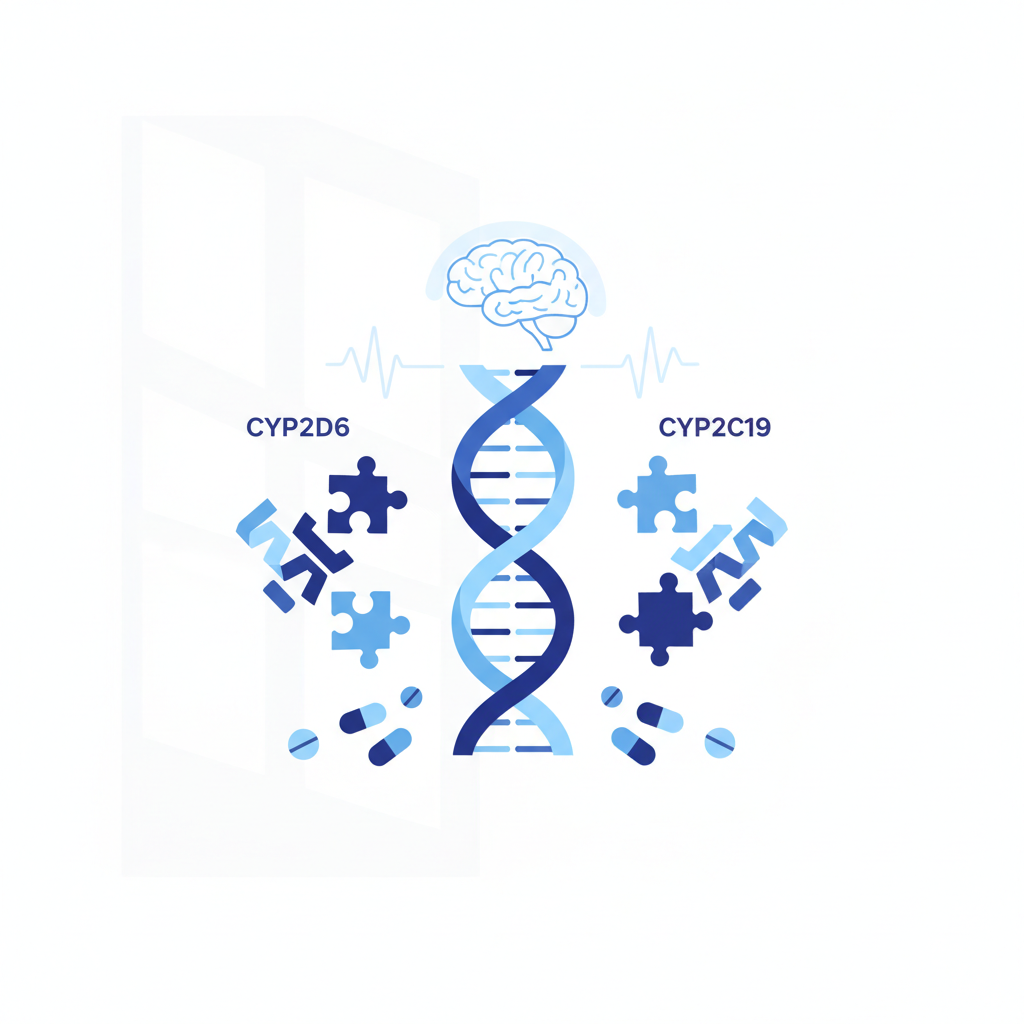
Picture taking a standard 50 mg dose of sertraline for anxiety. By day four, instead of subtle stabilization, you experience severe tremors, unrelenting nausea, and intense agitation. Across town, someone else receives that exact same dose, feels absolutely nothing after eight weeks, and wonders whether their body has developed immediate resistance to psychiatric treatment. In community forums and support groups, people frequently ask why medications that save one person's life make someone else violently ill or seem completely inert.
In standard clinical psychiatry, trial-and-error remains the default approach. A clinician prescribes a first-line agent, waits four to eight weeks to assess efficacy and tolerability, and adjusts the dose or switches compounds if things go sideways. When a second medication fails, the cycle repeats. Patients can easily spend six to twelve months enduring preventable side effects or unmanaged depression.
Modern clinical pharmacogenetics offers a clear biological explanation for these divergent outcomes. Much of this variability traces directly to genetic variation in two liver enzymes: CYP2D6 and CYP2C19. Armed with evidence-based guidelines from the Clinical Pharmacogenetics Implementation Consortium (CPIC) and the Dutch Pharmacogenetics Working Group (DPWG), clinicians can now predict drug behavior before the first pill is swallowed.
The Hepatic Engines: Understanding CYP2D6 and CYP2C19
The cytochrome P450 (CYP450) enzyme superfamily metabolizes the majority of clinically used drugs. In psychiatric pharmacology, CYP2D6 and CYP2C19 shoulder most of the burden.
The genes encoding these enzymes are highly polymorphic. Point mutations, insertions, deletions, and whole-gene duplications create functional categories known as metabolizer phenotypes:
- Poor Metabolizers (PMs): Possess little to no functional enzyme activity. They clear active drugs very slowly, causing high plasma concentrations and severe toxicity at standard doses. Conversely, they cannot activate prodrugs that require hepatic bioactivation.
- Intermediate Metabolizers (IMs): Display reduced enzymatic capacity compared to normal individuals. They frequently require lower doses to avoid long-term accumulation.
- Normal Metabolizers (NMs): Carry two fully functional alleles, clearing substrates at standard population rates.
- Rapid Metabolizers (RMs) and Ultrarapid Metabolizers (UMs): Carry alleles with increased activity or multiple gene duplications. They clear drugs so swiftly that standard doses never achieve therapeutic plasma concentrations, frequently masquerading as treatment-resistant illness.
Approximately 7% to 10% of people of European descent lack functional CYP2D6 entirely, while up to 2% carry gene duplications that render them ultrarapid metabolizers. For CYP2C19, nearly 15% to 20% of East Asian populations and 3% to 5% of Caucasian populations are poor metabolizers, whereas rapid and ultrarapid alleles (*17) are common worldwide. When you prescribe a psychiatric medication without knowing these genotypes, you are guessing how the patient will process it.
SSRIs, SNRIs, and Tricyclics: Mapping the Metabolic Pathways
Selective serotonin reuptake inhibitors (SSRIs), serotonin-norepinephrine reuptake inhibitors (SNRIs), and tricyclic antidepressants (TCAs) rely on specific pathways within this enzymatic machinery.
Escitalopram, Citalopram, and Sertraline
CYP2C19 serves as the primary clearance enzyme for escitalopram, citalopram, and to a lesser extent, sertraline. When a CYP2C19 poor metabolizer takes 20 mg of escitalopram, plasma drug concentrations can double or triple compared to a normal metabolizer. This elevated exposure dramatically raises the risk of intolerable adverse effects, including serotonin-related gastrointestinal distress, emotional blunting, and dangerous prolongations of the cardiac corrected QT (QTc) interval.
The CPIC Guideline for CYP2D6 and CYP2C19 Genotypes and SSRIs provides explicit dosing instructions for these scenarios. For escitalopram and citalopram in CYP2C19 poor metabolizers, CPIC recommends a 50% initial dose reduction or selecting an alternative agent not predominantly cleared by CYP2C19. For ultrarapid metabolizers, CPIC recommends considering an alternative medication right from the start, as reaching therapeutic exposure with standard citalopram or escitalopram regimens is mathematically improbable.
Paroxetine, Fluoxetine, and Venlafaxine
CYP2D6 handles the clearance of paroxetine and fluoxetine, as well as the active transformation of venlafaxine.
Venlafaxine represents an instructive case study in active metabolite balance. In the liver, CYP2D6 converts venlafaxine into its active primary metabolite, O-desvenlafaxine. While parent venlafaxine predominantly inhibits serotonin reuptake, O-desvenlafaxine contributes balanced noradrenergic reuptake inhibition. In CYP2D6 poor metabolizers, venlafaxine accumulation causes profound serotonergic side effects and cardiotoxicity, accompanied by inadequate noradrenergic tone. A large cohort study published in Translational Psychiatry demonstrated that CYP2D6 and CYP2C19 metabolic status significantly influences treatment failure rates in patients prescribed venlafaxine (Park et al., 2021). Poor metabolizers face markedly higher discontinuation rates caused by adverse reactions, while ultrarapid metabolizers fail due to inadequate drug concentrations.
Tricyclic Antidepressants (TCAs)
Tricyclics like amitriptyline and imipramine represent one of the most rigorously studied drug classes in pharmacogenetics. Tertiary amines (amitriptyline) are metabolized by CYP2C19 into active secondary amines (nortriptyline), both of which are subsequently hydroxylated and cleared by CYP2D6.
The CPIC Guideline for Tricyclic Antidepressants outlines how combinations of CYP2D6 and CYP2C19 variants produce extreme toxicities or complete treatment failures. In a patient who is a poor metabolizer at both loci, a standard dose of amitriptyline leads to massive cardiovascular toxicity, severe orthostatic hypotension, and anticholinergic delirium. Conversely, in rapid metabolizers, parent drugs disappear before reaching therapeutic thresholds.
Benzodiazepines: The Underappreciated CYP2C19 Influence
While antidepressants receive the bulk of pharmacogenetic attention, anxiolytics and hypnotics depend heavily on these same enzymes. Diazepam, one of the most widely used benzodiazepines, undergoes extensive N-demethylation to active desmethyldiazepam via CYP2C19 before subsequent clearance by CYP3A4.
In CYP2C19 poor metabolizers, the half-life of diazepam can stretch from an average of 30 to 50 hours up to an astonishing 100 hours or more. A patient prescribed standard daily diazepam can experience continuous drug accumulation, resulting in chronic daytime sedation, cognitive impairment, memory lapses, and an elevated risk of motor vehicle collisions or falls.
Conversely, ultrarapid metabolizers eliminate diazepam swiftly, prompting clinicians to assume that the patient is either displaying drug-seeking tolerance or that their anxiety is uniquely intractable. Checking genetic status brings biological clarity to what otherwise looks like behavioral inconsistency.
Phenoconversion: When Genetics Meets Polypharmacy
Genetics is not static in practice. A patient's genotype describes their baseline enzymatic potential, but co-prescribed drugs can dramatically alter their actual enzymatic output. This phenomenon is known as phenoconversion.
Phenoconversion occurs when an external inhibitor or inducer converts a patient's functional phenotype into something entirely different from their genotype (Cicali et al., 2021). Consider this common psychiatric dilemma:
A patient has a CYP2D6 genotype of *1/*1, making them a genetically normal metabolizer. They present with depression and are started on fluoxetine or bupropion. Both compounds act as potent, irreversible mechanism-based inhibitors of CYP2D6. Within days, their functional CYP2D6 activity drops near zero.
If that patient is subsequently prescribed a standard dose of a CYP2D6 substrate—such as atomoxetine for ADHD, aripiprazole for augmentation, or codeine for acute pain—they will process that second drug as a phenotypic poor metabolizer. If prescribed codeine, they will experience zero pain relief because they cannot bioactivate it into morphine. If prescribed aripiprazole, they will experience acute extrapyramidal symptoms due to drug accumulation.
Phenoconversion demonstrates why modern pharmacogenetic testing must be paired with clinical pharmacology knowledge. Interpreting a genetic test requires analyzing the entire medication list, including over-the-counter acid suppressants like omeprazole, which potently inhibits CYP2C19.
From Trial-and-Error to Clinical Guidelines
For years, skeptics questioned whether pre-emptive pharmacogenetic testing produced measurable clinical benefits. Landmark trials have answered that question with rigorous evidence.
The PREPARE trial, a prospective, international study across seven European clinical centers published in The Lancet, examined whether a 12-gene pharmacogenetic panel could reduce adverse drug reactions (Swen et al., 2023). Over 6,900 patients were evaluated across various medical disciplines, including psychiatry. The results were striking: patients whose treatment was guided by pre-emptive pharmacogenetics experienced a 30% reduction in clinically relevant adverse drug reactions compared to those receiving standard care.
Furthermore, the international psychiatric consensus is shifting toward upstream implementation. The Clinical Pharmacogenetics Implementation Consortium (CPIC) and the Dutch Pharmacogenetics Working Group (DPWG) provide publicly accessible, peer-reviewed clinical algorithms. These guidelines do not advise clinicians on whether to order a test; they explain precisely what to do once the genetic result exists. They provide clear, actionable instructions: reduce starting dose by 50%, pick an alternative drug class, or monitor plasma drug concentrations closely.
Rather than forcing a patient through six months of functional impairment, emergency visits, and mounting disillusionment with psychiatric care, upfront pharmacogenetic testing provides an objective biological blueprint. It protects patients from predictable toxicity, eliminates the frustration of non-response caused by ultrarapid clearance, and turns psychiatric prescribing into targeted precision medicine.
If you or your patients have spent months navigating unmanageable psychiatric side effects or failed medication trials, targeted DNA testing can illuminate the path forward. Explore our comprehensive clinical panel at BioGenetic Pharmacogenetics to discover how genetic profiling can optimize psychiatric care.
Equipo BioGenetic
References
- Bousman CA, Stevenson JM, Ramsey LB, et al. Clinical Pharmacogenetics Implementation Consortium (CPIC) Guideline for CYP2D6, CYP2C19, CYP2B6, SLC6A4, and HTR2A Genotypes and Serotonin Reuptake Inhibitor Antidepressants. Clinical Pharmacology & Therapeutics. 2023;114(1):51-68. PubMed
- Hicks JK, Sangkuhl K, Swen JJ, et al. Clinical Pharmacogenetics Implementation Consortium Guideline (CPIC) for CYP2D6 and CYP2C19 Genotypes and Dosing of Tricyclic Antidepressants: 2016 Update. Clinical Pharmacology & Therapeutics. 2017;102(1):37-44. PubMed
- Swen JJ, van der Wouden CH, Manson LE, et al. A 12-gene pharmacogenetic panel to prevent adverse drug reactions: an open-label, multicentre, controlled, cluster-randomised crossover implementation study. The Lancet. 2023;401(10374):347-356. PubMed
- Park Y, Bråten LS, Kringen MK, et al. Association between CYP2D6 and CYP2C19 genotypes and venlafaxine treatment failure: a retrospective study on two cohorts from Norway and the UK. Translational Psychiatry. 2021;11(1):397. PubMed
- Cicali EJ, Elchynski AL, Cavallari LH, Johnson JA. The Role of Phenoconversion in Pharmacogenomics: A Comprehensive Review. Clinical Pharmacology & Therapeutics. 2021;110(5):1278-1287. PubMed
Want to learn more on this topic?
Access courses, downloadable guides, and workshops for healthcare professionals and curious patients.
Explore Academy →Get genetic science in your inbox
One email per month with articles on prevention, nutrigenomics, and science-backed clinical decisions.