One Dose, Two Fates: How Your Genes Dictate Drug Reactions
Discover how genetic variants like CYP2D6 and CYP2C19 influence drug efficacy and safety. BioGenetic explores the path from trial-and-error prescribing to precision pharmacogenetics.
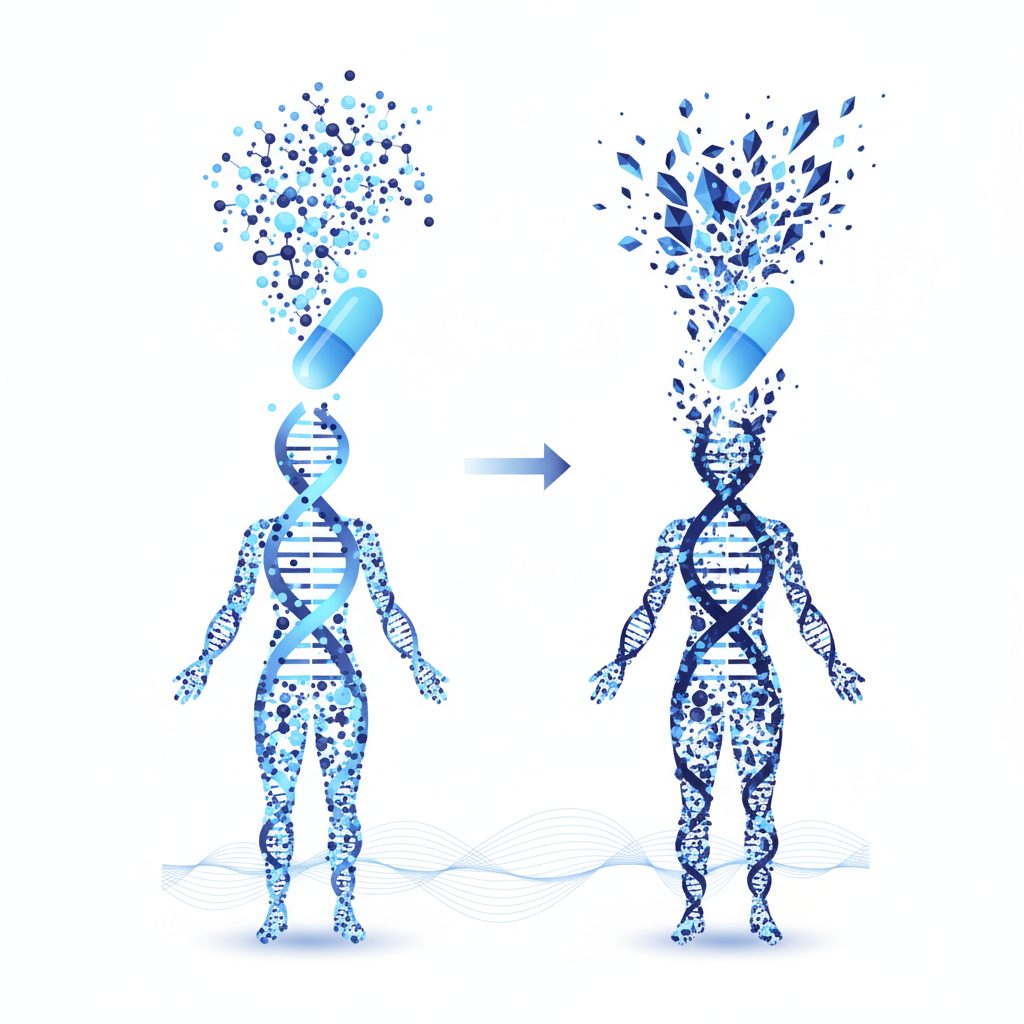
A study published in the Journal of the American Medical Association (JAMA) in 2018 revealed that over 90% of the population carries at least one actionable genetic variant that affects how they process common medications. While the traditional medical model relies on "trial and error" for prescribing dosage, the reality is that the physiological response to a chemical compound is rarely uniform. In clinical practice, we see patients who suffer debilitating side effects from standard doses of antidepressants, while others report no relief at all from potent painkillers. These discrepancies are not psychological or psychosomatic; they are the direct result of enzymatic variations encoded in our DNA.
The field of pharmacogenetics examines how these genetic variations influence drug metabolism, efficacy, and toxicity. By analyzing specific genes, primarily those belonging to the Cytochrome P450 (CYP) superfamily, we can move away from representative population averages and toward a model of precision medicine. The objective is to ensure that the patient receives the right drug at the right dose the first time, mitigating the risk of Adverse Drug Reactions (ADRs), which remain a leading cause of hospitalization globally.
The Enzymatic Machinery of the Liver
The majority of drug metabolism occurs in the liver, orchestrated by a suite of enzymes that chemically transform lipophilic (fat-soluble) drugs into hydrophilic (water-soluble) substances that the body can excrete. The most critical enzymes in this process are the Cytochrome P450 proteins. Among these, CYP2D6 and CYP2C19 are responsible for processing approximately 40% of all clinically prescribed medications, including beta-blockers, opioids, antidepressants, and antiplatelet agents.
What we measure in pharmacogenetic testing are "Single Nucleotide Polymorphisms" (SNPs) within the genes that code for these enzymes. Even a single base-pair change can drastically alter the protein's shape or its abundance in the liver. This leads to four distinct metabolic phenotypes that we observe in the population:
Poor Metabolizers (PM) possess little to no functional enzyme activity. For these individuals, standard doses can lead to toxic accumulation. Intermediate Metabolizers (IM) have reduced activity and may experience a higher incidence of side effects. Normal Metabolizers (NM) represent the "expected" baseline for which most drug trials are designed. Finally, Ultra-rapid Metabolizers (UM) process drugs so quickly that the medication is cleared from the bloodstream before it can reach therapeutic levels.
The Paradox of Codeine and CYP2D6
One of the most striking examples of how genes dictate drug fate is found in the relationship between codeine and the CYP2D6 enzyme. Codeine itself is a "prodrug," meaning it has very little analgesic effect in its raw form. To provide pain relief, it must be converted into morphine by the CYP2D6 enzyme in the liver.
A case report published in the New England Journal of Medicine (Koren et al., 2006) highlighted the extremity of this biological variable. The report described a breastfed infant who suffered fatal morphine poisoning. Despite the mother taking a standard, therapeutic dose of codeine for postpartum pain, she was an Ultra-rapid Metabolizer (UM) due to a gene duplication of CYP2D6. Her system converted the codeine into morphine at an accelerated rate, which then passed through her breast milk at lethal concentrations.
Conversely, approximately 7% to 10% of Caucasians are Poor Metabolizers of CYP2D6. When these individuals take codeine, their bodies cannot convert the drug into morphine. For them, the medication is effectively a placebo, leading to inadequate pain management and the potential for healthcare providers to mistakenly believe the patient is "drug-seeking" or exaggerating their symptoms. In clinic, we utilize pharmacogenetic data to identify these risks before the first prescription is written, opting for analgesics that do not require CYP2D6 activation.
Antidepressants and the CYP2C19 Pathway
Mental health treatment is perhaps the area where pharmacogenetics has the most immediate, day-to-day impact. Selective Serotonin Reuptake Inhibitors (SSRIs) like escitalopram and sertraline are primarily metabolized by the CYP2C19 enzyme. Because the therapeutic window for these drugs is narrow and they often take weeks to demonstrate efficacy, a "trial and error" approach is particularly taxing for the patient.
Clinical guidelines from the Clinical Pharmacogenetics Implementation Consortium (CPIC) provide specific dosing adjustments based on CYP2C19 status. For instance, a patient identified as a Poor Metabolizer for CYP2C19 should typically be started at a 50% lower dose of sertraline or switched to an alternative medication entirely to avoid excessive plasma concentrations that lead to agitation, insomnia, and gastrointestinal distress.
A 2023 meta-analysis published in The Lancet confirmed that patients whose antidepressant treatment was guided by pharmacogenetic testing were significantly more likely to achieve remission compared to those receiving standard care. We find that when patients understand that their lack of response or their severe side effects have a biological basis in their DNA, it significantly improves treatment adherence and the overall therapeutic alliance.
Cardiovascular Health and Plavix Resistance
The application of pharmacogenetics extends deeply into cardiology, particularly concerning antiplatelet therapy. Clopidogrel (Plavix) is frequently prescribed to prevent blood clots after a stent placement or a heart attack. Like codeine, clopidogrel is a prodrug that must be activated, in this case by the CYP2C19 enzyme.
Research published in Nature Genetics has demonstrated that individuals carrying the CYP2C192* or CYP2C193* loss-of-function alleles have a significantly higher risk of major adverse cardiovascular events, including stent thrombosis and stroke, because they cannot adequately activate the drug. In these cases, the "standard of care" is fundamentally unsafe for the patient's specific genetic profile.
By identifying "Clopidogrel resistance" through genetic testing, we can steer patients toward alternative therapies like ticagrelor or prasugrel, which do not depend on the CYP2C19 pathway for activation. This proactive shift from reactive to preventive medicine represents the pinnacle of modern clinical genetics.
Beyond Cytochromes: HLA and Hypersensitivity
While the CYP450 family handles drug kinetics (how the body acts on the drug), other genes influence pharmacodynamics (how the drug acts on the body) or immune-mediated reactions. The Human Leukocyte Antigen (HLA) system is a prime example. Certain genetic variants in the HLA system can predispose individuals to severe, life-threatening skin reactions, such as Stevens-Johnson Syndrome (SJS) or Toxic Epidermal Necrolysis (TEN).
For example, the variant HLA-B15:02* is highly associated with SJS when taking the anticonvulsant carbamazepine, particularly in populations of Asian descent. Similarly, the HLA-B57:01* variant is a known predictor of hypersensitivity to the HIV medication abacavir. Testing for these markers is no longer considered experimental; in many jurisdictions, it is a mandatory clinical requirement before the drugs can be dispensed.
What we observe in the evolving landscape of genomics is a shift toward a "pharmacogenetic passport." Instead of testing one gene for one drug, we move toward comprehensive panels that provide a lifetime of utility. A single test performed today can inform the safety of a surgery ten years from now, the choice of an antidepressant next month, or the management of hypertension in a decade.
The data is clear: our genetic map dictates our chemical destiny. By integrating pharmacogenetics into routine clinical practice, we remove the guesswork from the pharmacy counter and ensure that the medicine intended to heal does not inadvertently cause harm.
At BioGenetic, we provide the comprehensive genomic analysis required to navigate these complexities. Understanding your metabolic profile is a foundational step in personalized health management. For more information on our pharmacogenetic panels and how they can be integrated into your clinical care, please contact our team via WhatsApp for a personalized orientation.
BioGenetic Team
Want to learn more on this topic?
Access courses, downloadable guides, and workshops for healthcare professionals and curious patients.
Explore Academy →Get genetic science in your inbox
One email per month with articles on prevention, nutrigenomics, and science-backed clinical decisions.