What Can Genetics Really Tell You About Athletic Potential?
Ever wonder why the same workout yields different results? Science suggests genetics account for up to 70% of the variance in athletic ability.
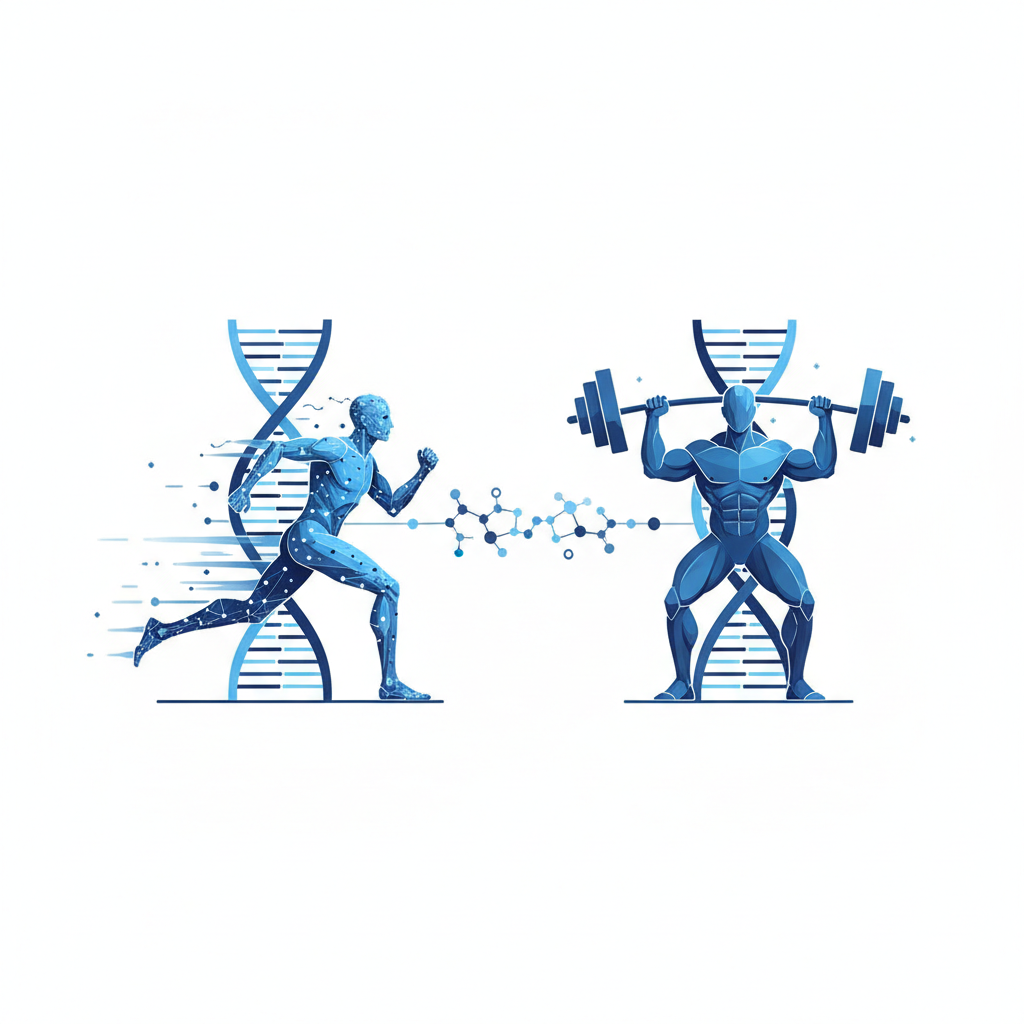
Beyond the Hype: What Can Genetics Really Tell You About Your Athletic Potential?
Imagine two people commit to the exact same marathon training program. They run the same distances, eat similar diets, and get equal amounts of sleep. After six months, one person shaves 20 minutes off their personal best, while the other struggles with nagging injuries and sees only minor improvement. Is it just a matter of "willpower"? Not entirely.
The science is increasingly clear: while hard work and discipline are non-negotiable, your genetic makeup plays a significant role. In fact, studies estimate that genetics can account for anywhere from 30% to 70% of the variation in athletic traits between individuals. This doesn't mean your athletic future is predetermined. Instead, it means you have a unique biological blueprint. Understanding that blueprint can be the key to training smarter, recovering better, and unlocking your true potential.
Discussions online are full of questions about "good genetics" for certain sports or why some body types seem predisposed to specific activities. Let’s move beyond the locker-room myths and look at what the research shows about the specific genes that influence your performance.
The "Gene for Speed": ACTN3 and Muscle Fiber Type
You've probably heard about muscle fiber types. Your muscles are composed of a mix of slow-twitch (Type I) and fast-twitch (Type II) fibers.
- Slow-twitch fibers are endurance engines. They are efficient at using oxygen to generate fuel, making them resistant to fatigue. They’re crucial for sustained activities like long-distance running, cycling, or swimming.
- Fast-twitch fibers are built for power and speed. They contract quickly and forcefully but fatigue much faster. They are essential for explosive movements like sprinting, jumping, and heavy weightlifting.
The proportion of these fibers in your muscles is heavily influenced by genetics, and one of the most-studied genes in this area is ACTN3. This gene provides instructions for making a protein called alpha-actinin-3. The interesting part? This protein is found exclusively in fast-twitch muscle fibers, where it helps produce powerful, rapid contractions.
The ACTN3 gene comes in two common versions, or alleles: 'R' and 'X'.
- The R allele is the "functional" version, leading to the production of alpha-actinin-3. Having at least one copy of the R allele (genotypes RR or RX) means your fast-twitch fibers have this protein, giving them an explosive edge. Unsurprisingly, elite power and sprint athletes show a much higher frequency of the RR genotype than the general population.
- The X allele contains a change that stops the alpha-actinin-3 protein from being produced. People with two copies of the X allele (the XX genotype) don't make this protein at all. About 18% of people worldwide, or over a billion individuals, have this genotype.
Does this mean someone with the XX genotype can't be a sprinter? No. But their muscle physiology is different. Research suggests that in the absence of alpha-actinin-3, muscles may develop characteristics that favor endurance performance—like increased mitochondrial activity and more efficient metabolism. Indeed, the XX genotype is found more frequently in elite endurance athletes. This genetic information doesn't set a limit; it offers a clue about your natural inclinations.
Your Body's Engine: ACE, PPARGC1A, and Aerobic Capacity
Beyond muscle type, your ability to sustain effort depends on how efficiently your body transports and uses oxygen. This is your aerobic capacity, often measured as VO2 max. Two key genes influencing this complex system are ACE and PPARGC1A.
The ACE gene encodes the Angiotensin-Converting Enzyme, a critical player in regulating blood pressure and fluid balance. It has two main variants:
- I (Insertion) allele: This version is associated with lower levels of the ACE enzyme in the blood. Lower ACE activity is linked to improved endurance performance. This might be because it enhances skeletal muscle efficiency, allowing muscles to do more work with less oxygen. The I allele is found more frequently in elite endurance runners and high-altitude mountaineers.
- D (Deletion) allele: This version is linked to higher levels of the ACE enzyme, which can contribute to higher blood pressure and muscle growth (hypertrophy). While not ideal for pure endurance, the D allele has been associated with advantages in strength and power sports.
The PPARGC1A gene acts as a "master switch" for energy metabolism. It helps trigger the creation of new mitochondria—the powerhouses inside your cells that generate energy. More mitochondria mean a greater capacity to produce energy aerobically, which is the cornerstone of endurance. Certain variants of PPARGC1A have been linked to a greater increase in VO2 max in response to endurance training. If you have one of these variants, you might find that your aerobic fitness improves more dramatically with consistent training compared to someone with a different variant.
Building for Resilience: COL5A1, Inflammation, and Injury Risk
Why does it seem like some athletes are constantly sidelined with injuries while others are remarkably resilient? While training load and biomechanics are huge factors, your genetic makeup can predispose you to certain vulnerabilities, particularly in your connective tissues.
One key gene here is COL5A1, which provides instructions for making type V collagen. Collagen is the main structural protein in your body, forming the "scaffolding" for tendons, ligaments, and skin. It provides strength and structure.
Certain variants in the COL5A1 gene have been associated with differences in the flexibility of these connective tissues. For some, this might mean greater range of motion—a potential advantage in sports like gymnastics or swimming. However, this increased laxity can come at a cost. Studies, such as one published in the International Journal of Sports Medicine (Posthumus et al., 2011), have linked these same variants to a higher risk of soft tissue injuries, including chronic Achilles tendinopathy and ACL (anterior cruciate ligament) ruptures.
Similarly, genes that regulate inflammation, like IL6, play a role. Interleukin-6 (IL-6) is a signaling molecule (a cytokine) that your body releases in response to the muscle damage caused by intense exercise. It has a complex job: it helps kickstart the inflammatory repair process but also has anti-inflammatory effects and helps mobilize energy. Genetic variations can affect how much IL-6 your body produces and for how long. A "high responder" might experience more intense muscle soreness and require longer recovery periods, while a "low responder" might bounce back more quickly.
This knowledge doesn't mean an injury is inevitable. It means you can be proactive. If you know you have a genetic predisposition to tendon injuries, you can prioritize targeted strengthening exercises, perfect your form, and be more strategic about your warm-ups and recovery protocols.
From Data to Action: This Is Not Genetic Determinism
It is crucial to approach this information with the right mindset. There is no single "champion gene." Athletic greatness is a complex puzzle with thousands of pieces, including hundreds, if not thousands, of genetic variants that each make a small contribution. The genes discussed here are simply some of the most well-researched.
The true power of sports genetics is not to label you as a "sprinter" or an "endurance athlete" or to say you are "injury-prone." Your genes don't close doors. They simply provide a personalized road map.
Think of it this way:
- Knowing you have the ACTN3 XX genotype doesn't mean you should give up on strength training. It may mean you'll thrive on a program that blends higher repetition ranges with explosive movements to fully stimulate all fiber types.
- Discovering you have an ACE I allele might encourage you to test your limits in a 10K or triathlon, where your natural efficiency could shine.
- Understanding your COL5A1 profile can empower you to work with a physical therapist to build a prehab routine that bulletproofs your joints.
This is about moving from a one-size-fits-all approach to a personalized strategy. It’s about working with your biology, not against it. Your DNA provides the starting point, but your dedication, training, and mindset determine how far you go.
Your genetic profile is a powerful tool for self-knowledge. It can help you personalize your training for better results, optimize your recovery to stay consistent, and implement preventative strategies to reduce injury risk. If you're ready to look under the hood and understand the blueprint that makes you unique, exploring your sports-related genetics may be your next great performance enhancer.
Learn more about how genetic insights can transform your approach to fitness and health by exploring our Sports Panel.
Equipo BioGenetic
References
- Pickering, C., & Kiely, J. (2017). ACTN3: More than just a gene for speed. Frontiers in Physiology, 8, 1080.
- Ma, F., Yang, Y., Li, X., et al. (2013). The association of sport performance with ACE and ACTN3 genetic polymorphisms: a systematic review and meta-analysis. PloS one, 8(1), e54685.
- Posthumus, M., Collins, M., & September, A. V. (2011). The COL5A1 gene and Achilles tendon pathology. International Journal of Sports Medicine, 32(10), 735–741.
Want to learn more on this topic?
Access courses, downloadable guides, and workshops for healthcare professionals and curious patients.
Explore Academy →Get genetic science in your inbox
One email per month with articles on prevention, nutrigenomics, and science-backed clinical decisions.